Apioideae
Die Apioideae sind eine Unterfamilie in der Pflanzenfamilie der Doldenblütler (Apiaceae oder Umbelliferae). Mit über 400 Gattungen und 3500 Arten ist es die formenreichste der Unterfamilien innerhalb der Familie Apiaceae. Die Apioideae sind fast weltweit verbreitet, jedoch mit Schwerpunkt in den gemäßigten Gebieten der Nordhalbkugel. Einige Gattungen, beispielsweise Möhren (Daucus), Pastinaken (Pastinaca), und Sellerie (Apium) enthalten wichtige Kulturpflanzen.
Merkmale


Folgende Merkmale teilen alle Taxa der Unterfamilie:
- Sie besitzen keine Nebenblätter.
- Die Samenanlagen sind tenuinucellat; das Endokarp besteht aus einer Zellschicht und ist nicht lignifiziert.
- Sie besitzen Ölgänge.
Die meisten Arten sind krautige Pflanzen mit mehrfach geteilten Laubblättern. Einige wenige Arten der Unterfamilie verholzen, beispielsweise in den Gattungen Bupleurum (wenige Arten), Myrrhidendron und Steganotaenia.
Nur die Taxa der Apioideae im früheren Umfang, aber nicht die Taxa der ehemaligen Unterfamilie der Saniculoideae besitzen folgende Eigenschaften:
- Die Frucht ist eine trockene, zweiteilige Spaltfrucht, auch Doppelachäne genannt. Die zwei Teilfrüchte (Mericarpien oder Carpiden) bleiben zunächst meist noch mit der Oberseite an einem Fruchthalter (Karpophor) hängen, der sich dazwischen befindet.
- Die Ölgänge sind ausgeprägt.
Die Vertreter der Apioideae besitzen in der Regel doppeldoldige Blütenstände mit Dolden sowie Döldchen und Hüllen sowie Hüllchen. Der Aufbau der Blüte kann in folgender Blütenformel zusammengefasst werden:
Die Chromosomengrundzahl beträgt x = 11.
Nutzung und Giftigkeit
Zur Unterfamilie der Apioideae gehören viele Gewürz- und Nahrungspflanzen. Es sind auch einige sehr giftige Pflanzen darunter, beispielsweise der Wasserschierling und der Gefleckte Schierling.
Systematik
Die Unterfamilie Apioideae wurde 1866 durch Berthold Carl Seemann (1865–1873) in Flora Vitiensis: a description of the plants of the Viti or Fiji islands, with an account of their history, uses, and properties. Volume 1, S. 112 aufgestellt.[1] Typusgattung ist Apium Vorlage:Person Eine wichtige Bearbeitung dieser Unterfamilie erfolgte 1983 durch R. F. Thorne in P. Royen: Alpine Flora of New Guinea. Band 4, S. 2994.


_-_21.jpg)


Äußere Systematik
Kladogramm der Unterfamilien der Doldenblütler (Apiaceae) mit Apioideae: Vorlage:Klade
Innere Systematik
In der Unterfamilie der Apioideae gibt es über 400 Gattungen mit etwa 3500 Arten (404 Gattungen mit 2827 bis 2935 Arten[2] oder etwa 3000 Arten). Moderne Untersuchungen mit gentechnischen Methoden zeigen, dass die hergebrachte auf der Morphologie der Früchte basierende Klassifikation innerhalb der Unterfamilie in weiten Teilen unzutreffend sein muss und zu vielen nicht-monophyletischen (vgl. Kladistik) Gruppierungen geführt hat. Die Einteilung der Unterfamilie in Triben und Gattungen ist deshalb im Fluss und aktuell Gegenstand intensiver botanischer Forschung. Seit Anthony R. Magee et al. 2010 gehören auch die Gattungen der ehemaligen Saniculoideae als die zwei Triben Steganotaenieae und Saniculeae hierhin. Nach Steven R. Downie et al. 2001,[3] F.-J. Sun et al. 2004,[4] und A. R. Magee et al. 2009[5] wurde die Unterfamilie der Apioideae 2009 in 21 Triben gegliedert. Die innere Systematik der Apioideae wird weiterhin kontrovers diskutiert. Je nach Autor wird nur in Tribus (mit Untertribus) oder Tribus und Kladen gegliedert.[2] Nach dem Stand der Wissenschaft von 2013 enthalten die Apioideae 28 monophyletische Triben und mehrere Hauptkladen, die noch keine Namen erhalten haben.[6]
Hier die Triben, Untertriben und Kladen mit ihren Gattungen; einige Gattungen sind noch in keiner Tribus eingeordnet (weitgehend auf dem Stand von 2010):[7][8][9]
- Tribus Aciphylleae Vorlage:Person: Sie enthält etwa fünf Gattungen mit fast 70 Arten in Australien und Neuseeland.[2]
- Aciphylla Vorlage:Person (Syn.: Coxella Vorlage:Person): Die etwa 40 Arten sind hauptsächlich in Neuseeland verbreitet; etwa zwei Arten sind in Australien beheimatet.
- Anisotome Vorlage:Person: Die Heimat der etwa 16 Arten ist hauptsächlich Neuseeland.
- Gingidia Vorlage:Person (Syn.: Gingidium Vorlage:Person): Von den etwa sieben Arten kommen fünf Arten in Neuseeland und zwei Arten in Australien vor.
- Lignocarpa Vorlage:Person: Die etwa zwei Arten kommen in Neuseeland vor.
- Scandia Vorlage:Person: Die etwa zwei Arten kommen in Neuseeland vor.
- Acronema-Klade: Sie enthält etwa 14 Gattungen in Eurasien:[2]
- Acronema Vorlage:Person: Die 25 bis 30 Arten gedeihen in größeren Höhenlagen der Sino-Himalaja-Region vom östlichen Nepal bis in die südwestliche Volksrepublik China. In China gibt es etwa 20 Arten, 14 davon nur dort.[10]
- Halosciastrum Vorlage:Person: Sie enthält nur eine Art:
- Halosciastrum melanotilingia Vorlage:Person (Syn.: Cymopterus crassus Vorlage:Person, Ligusticum purpureopetalum Vorlage:Person, Ostericum crassum Vorlage:Person, Pimpinella crassa Vorlage:Person): Sie ist vom nordöstlichen China über Korea bis in Russlands Fernen Osten verbreitet.
- Harrysmithia Vorlage:Person: Von den nur zwei Arten kommt die eine nur im nördlichen Yunnan und die im nördlichen Sichuan sowie im südöstlichen Teil des autonomen Gebietes Tibet vor.[10]
- Kitagawia Vorlage:Person: Die etwa neun Arten sind in Asien verbreitet.
- Ligusticum Vorlage:Person (Syn.: Cynapium Vorlage:Person, Arafoe Vorlage:Person, Coristospermum Vorlage:Person, Gaya Vorlage:Person, Macrosciadium Vorlage:Person, Neogaya Vorlage:Person): Die je nach Autor nur noch ein bis zwei[11] oder 48 bis 60 Arten sind auf der Nordhalbkugel verbreitet. Diese Gattung wurde durch Valiejo-Roman et al. 2006 in mehrere kleinere Gattungen aufgegliedert.[12] Zu den Arten der Gattung Ligusticum s str. gehören:[11]
- Schottischer Liebstöckel (Ligusticum scothicum Vorlage:Person)[11]
- Glänzender Liebstöckel (Ligusticum lucidum Vorlage:Person)
- Ligusticum holopetalum Vorlage:Person
- Meeboldia Vorlage:Person: Die etwa drei Arten sind in Sino-Himalaja-Region verbreitet. In China gibt es zwei Arten, eine davon nur in Yunnan sowie im südöstlichen Tibet.[10]
- Oreocomopsis Vorlage:Person: Von den nur drei Arten kommt eine nur in Höhenlagen von 5100 bis 5300 Metern nur im südlichen Tibet vor und die beiden anderen gedeihen im Himalaja.[10]
- Pachypleurum Vorlage:Person: Die etwa sechs Arten sind in Eurasien verbreitet. In China gibt es alle sechs Arten, fünf davon nur dort.
- Pternopetalum Vorlage:Person (Syn.: Cryptotaeniopsis Vorlage:Person): Die etwa 25 Arten sind von der Himalaja-Region bis Ostasien verbreitet. In China gibt es 23 Arten, 19 davon nur dort.[10]
- Pterygopleurum Vorlage:Person: Sie enthält nur eine Art:
- Pterygopleurum neurophyllum Vorlage:Person: Sie kommt in Japan sowie Korea vor.
- Rupiphila Vorlage:Person: Sie enthält nur eine Art:
- Rupiphila tachiroei Vorlage:Person: Sie kommt in Ostasien vor.
- Sinocarum Vorlage:Person: Die etwa 20 Arten gedeihen in größeren Höhenlagen der Sino-Himalaja-Region von Nepal bis ins südwestliche China. In China gibt es etwa acht Arten, vier davon nur dort.[10]
- Spuriopimpinella Vorlage:Person: Die etwa fünf Arten sind in Ostasien verbreitet.
- Tilingia Vorlage:Person: Die etwa fünf Arten sind im nördlichen Asien sowie in Ostasien und in Alaska verbreitet.
- Tribus Annesorhizeae Vorlage:Person (Syn.: Annesorhiza-Klade): Sie enthält etwa sechs Gattungen in Europa und Afrika:[13][14]
- Annesorhiza Vorlage:Person: Die 11 (Magee 2011) bis 20 (seit der Revision von 2011 wurden einige Arten neu beschrieben) Arten sind in Südafrika verbreitet, nur eine Art kommt auch in Eswatini vor. Die meisten Arten kommen nur in der Provinz Westkap vor, vier Arten gibt es im Nordkap und drei Arten im Ostkap. Zwei Arten kommen in Limpopo sowie Mpumalanga vor und eine davon auch in KwaZulu-Natal.[14][15]
- Astydamia Vorlage:Person: Es gibt nur eine Art:
- Nymphendolde (Astydamia latifolia Vorlage:Person): Das Verbreitungsgebiet ist auf Marokko, die Ilhas Selvagens und die Kanarischen Inseln beschränkt.[8]
- Chamarea Vorlage:Person (Syn.: Schlechterosciadium Vorlage:Person): Die etwa fünf Arten sind im südlichen Afrika verbreitet.[16]
- Ezosciadium Vorlage:Person: Es gibt nur eine Art:
- Ezosciadium capense Vorlage:Person: Diese gefährdete Art ist eine einjährige Pflanze und ein Endemit des Ostkap.[17]
- Itasina Vorlage:Person (Syn.: Thunbergiella Vorlage:Person): Es gibt nur eine Art:
- Itasina filifolia Vorlage:Person: Diese gefährdete Art ist ein Endemit in der südafrikanischen Provinz Westkap.[18]
- Molopospermum Vorlage:Person: Sie enthält nur eine Art:
- Peloponnesische Schirmdolde, Striemendolde, Striemensame (Molopospermum peloponnesiacum Vorlage:Person): Sie ist von West- über Mittel- bis Südeuropa verbreitet.
- Tribus Apieae Vorlage:Person:[2] Sie enthält seit 2015 etwa 15 Gattungen:[19]
- Knorpelmöhren (Ammi Vorlage:Person, Syn.: Gingidium Vorlage:Person, Gohoria Vorlage:Person, Visnaga Vorlage:Person):[19] Die vier bis sechs Arten sind im Mittelmeerraum und auf den Azoren verbreitet;[8] beispielsweise:
- Große Knorpelmöhre (Ammi majus Vorlage:Person)
- Bischofskraut (Ammi visnaga Vorlage:Person)
- Anethum Vorlage:Person:[19] Es gibt nur eine Art:[10]
- Dill (Anethum graveolens Vorlage:Person): Das ursprüngliche Verbreitungsgebiet der weltweit angebauten Gewürzpflanze war Vorderasien.
- Sellerie (Apium Vorlage:Person, Syn.: Panulia Vorlage:Person):[19] Die etwa 20 Arten sind in den gemäßigten Gebieten weltweit verbreitet.
- Billburttia Vorlage:Person:[19] Sie wurde 2009 aufgestellt und enthält nur zwei Arten, die nur auf Madagaskar vorkommen.[20]
- Canaria Vorlage:Person: Sie wurde 2015 aufgestellt und enthält nur eine Art:[19]
- Canaria tortuosa Vorlage:Person (Syn.: Cachrys tortuosa Vorlage:Person, Cnidium tortuosum Vorlage:Person, Ferula tortuosa Vorlage:Person, Foeniculum tortuosum Vorlage:Person, Seseli webbii Vorlage:Person): Sie kommt nur auf den Kanarischen Inseln vor.[19]
- Deverra Vorlage:Person[19] (Syn.: Pituranthos Vorlage:Person): Die etwa zehn Arten sind in Trockengebieten Afrikas und Asiens verbreitet.
- Foeniculum Vorlage:Person:[19] Es gibt nur eine Art:
- Fenchel (Foeniculum vulgare Vorlage:Person): Das ursprüngliche Verbreitungsgebiet der weltweit angebauten Kulturpflanze war der Mittelmeerraum.
- Modesciadium Vorlage:Person: Sie wurde 2015 aufgestellt und enthält nur eine Art:[19]
- Modesciadium involucratum Vorlage:Person (Syn.: Brachyapium involucratum Vorlage:Person, Stoibrax involucratum Vorlage:Person, Trachyspermum involucratum Vorlage:Person, Tragiopsis involucrata Vorlage:Person): Dieser Endemit kommt nur im zentral-südwestlichen Marokko von Zaïane bis zur nördlichen Sahara vor.[19]
- Naufraga Vorlage:Person:[19] Es gibt nur eine Art:
- Naufraga balearica Vorlage:Person: Sie kommt nur auf Mallorca und Korsika vor.[8]
- Petroselinum Vorlage:Person: Die nur zwei Arten, darunter die bekannte Kulturpflanze Petersilie (Petroselinum crispum Vorlage:Person) sind ursprünglich in Europa und vermutlich in Westasien beheimatet.
- Pseudoridolfia Vorlage:Person:[19] Sie wurde 2009 aufgestellt und enthält nur eine Art:
- Pseudoridolfia fennanei Vorlage:Person: Sie kommt nur in Marokko vor.[21]
- Ridolfia Vorlage:Person:[19] Sie enthält nur eine Art:
- Ridolfia segetum Vorlage:Person: Sie ist im Mittelmeerraum verbreitet.
- Schoenoselinum Vorlage:Person: Sie wurde 2015 aufgestellt und enthält nur eine Art:[19]
- Schoenoselinum foeniculoides Vorlage:Person (Syn.: Anethum foeniculoides Vorlage:Person): Dieser Endemit kommt nur im südwestlichen Marokko von Chtouka bis zur nördlichen Sahara vor.[19]
- Sclerosciadium Vorlage:Person:[19] Sie enthält nur eine Art:
- Sclerosciadium nodiflorum Vorlage:Person: Sie kommt nur in Marokko vor.
- Stoibrax Vorlage:Person[19] (Syn: Brachyapium Vorlage:Person, Tragiopsis Vorlage:Person): Die etwa fünf Arten kommen in Spanien, Nordafrika und im südlichen Afrika vor.
- Knorpelmöhren (Ammi Vorlage:Person, Syn.: Gingidium Vorlage:Person, Gohoria Vorlage:Person, Visnaga Vorlage:Person):[19] Die vier bis sechs Arten sind im Mittelmeerraum und auf den Azoren verbreitet;[8] beispielsweise:
- Arcuatopterus-Klade[2]: Sie enthält nur eine Gattung:
- Arcuatopterus Vorlage:Person: Die drei bis fünf Arten sind vom östlichen Himalaja bis ins südwestliche China verbreitet. In China gibt es drei Arten, zwei davon nur dort.[10]
- Tribus Arracacieae = Arracacia-Klade[2]: Die etwa zehn Gattungen kommen in der Neotropis vor:
- Arracacia Vorlage:Person: Die etwa 30 Arten sind in der Neotropis verbreitet, darunter:
- Arakacha (Arracacia xanthorrhiza Vorlage:Person): Sie kommt in Peru und Kolumbien vor.
- Coaxana Vorlage:Person: Die nur zwei Arten kommen in Mexiko vor.
- Coulterophytum Vorlage:Person: Die etwa fünf Arten kommen in Mexiko vor.
- Dahliaphyllum Vorlage:Person: Es gibt nur eine Art:
- Dahliaphyllum almedae Vorlage:Person: Sie ist in Mexiko beheimatet.
- Donnellsmithia Vorlage:Person: Die etwa 19 Arten sind von Mexiko bis Zentralamerika verbreitet.
- Enantiophylla Vorlage:Person: Es gibt nur eine Art:
- Enantiophylla heydeana Vorlage:Person: Sie ist von Mexiko bis Zentralamerika verbreitet.
- Mathiasella Vorlage:Person: Es gibt nur eine Art:
- Mathiasella bupleuroides Vorlage:Person: Sie ist in Mexiko beheimatet.
- Myrrhidendron Vorlage:Person: Die etwa fünf Arten kommen von Zentralamerika bis Kolumbien vor.
- Prionosciadium Vorlage:Person: Die etwa 25 Arten sind in der Neotropis verbreitet.
- Rhodosciadium Vorlage:Person: Die etwa zwölf Arten kommen in Mexiko vor.
- Arracacia Vorlage:Person: Die etwa 30 Arten sind in der Neotropis verbreitet, darunter:
- Tribus Bupleureae Vorlage:Person (vielleicht eine eigene Unterfamilie Bupleuroideae Vorlage:Person): Sie enthält nur eine Gattung:[2]
- Hasenohren (Bupleurum Vorlage:Person): Die 180 bis 190 Arten sind in den gemäßigten Gebieten der Nordhalbkugel verbreitet.
- Cachrys-Klade = Tribus Cachrydinae Vorlage:Person: Sie enthält etwa acht Gattungen mit 100 bis 105 Arten hauptsächlich in den warmgemäßigten Gebieten Eurasiens und Nordafrikas, mit der größten Artenvielfalt vom östlichen Mittelmeerraum bis Südwestasien:[2][22][23]
- Alococarpum Vorlage:Person: Sie enthält nur eine Art:
- Alococarpum erianthum Vorlage:Person: Sie kommt nur im Iran vor.
- Azilia Vorlage:Person: Sie enthält nur eine Art:
- Azilia eryngioides Vorlage:Person: Sie kommt nur im Iran vor.
- Bilacunaria Vorlage:Person: Die etwa vier Arten sind im Kaukasusraum verbreitet.
- Cachrys Vorlage:Person: Die etwa elf Arten sind im Mittelmeerraum verbreitet. Arten kommen in Tunesien, Algerien, Marokko, Spanien, Portugal, Italien, Albanien, Bulgarien, Rumänien, Griechenland, in der Türkei, im Iran, Libyen, im Nordkaukasus, im südlichen Teil des europäischen Russland, in Transkaukasien sowie auf der Krim vor.[23]
- Diplotaenia Vorlage:Person: Sie etwa vier Arten sind in der Türkei und im Iran verbreitet.
- Eriocycla Vorlage:Person (früher in Seseli Vorlage:Person, Syn.: Cremastosciadium Vorlage:Person, Petrosciadium Vorlage:Person): Die sechs bis acht Arten sind vom nördlichen Iran über die westliche Himalaja-Region bis ins nördliche sowie westliche China verbreitet. In China gibt es etwa drei Arten, zwei davon nur dort.[10]
- Ferulago Vorlage:Person: Die etwa 47 Arten sind vom Mittelmeerraum bis Zentralasien verbreitet, beispielsweise mit:
- Prangos Vorlage:Person: Die etwa 17 Arten sind vom Mittelmeerraum bis Zentralasien verbreitet.
- Alococarpum Vorlage:Person: Sie enthält nur eine Art:
- Tribus Careae Vorlage:Person:[2] Die zehn bis elf Gattungen mit 37 bis 38 Arten gedeihen in den gemäßigten Gebieten Eurasiens, mit der größten Artenvielfalt von Südwest- bis Zentralasien:[22][24]
- Aegokeras Vorlage:Person: Es gibt nur eine Art:
- Aegokeras caespitosa Vorlage:Person: Sie kommt in Kleinasien vor.
- Giersch (Aegopodium Vorlage:Person; Syn.: Chamaele Vorlage:Person, Pseudopimpinella Vorlage:Person): Die etwa sieben Arten sind in Eurasien verbreitet.[24]
- Kümmel (Carum Vorlage:Person): In der polyphyletischen Gattung Carum s. l. waren 2007 noch 20 bis 30[25] Arten in Eurasien und Nordafrika enthalten. Seit 2012 enthält die monophyletische Gattung Carum s. str. nur noch vier[24] oder fünf Arten (Carum carvi Vorlage:Person, Carum meifolium Vorlage:Person, Carum caucasicum Vorlage:Person, Carum grossheimii Vorlage:Person sowie Carum porphyrocoleon Vorlage:Person), die im Kaukasusraum und angrenzenden Staaten des Nahen Ostens verbreitet sind. Die anderen Arten werden/wurden in neue oder andere Gattungen eingegliedert, teilweise gehören sie zu anderen Tribus.[24]
- Chamaesciadium Vorlage:Person: Sie enthält nur eine Art:
- Chlaenosciadium gardneri Vorlage:Person: Sie ist von Nordafrika bis Südwestasien verbreitet.
- Sichelmöhren (Falcaria Vorlage:Person): Die vier bis fünf Arten sind im Mittelmeerraum und von Zentralasien bis zum südwestlichen Sibirien verbreitet, beispielsweise:
- Gemeine Sichelmöhre (Falcaria vulgaris Vorlage:Person): Sie ist von Mitteleuropa bis zur Türkei und bis zum südwestlichen Sibirien verbreitet.
- Fuernrohria Vorlage:Person: Sie enthält nur eine Art:
- Fuernrohria setifolia Vorlage:Person: Sie kommt im Kaukasusraum und in Armenien vor.
- Gongylosciadium Vorlage:Person: Sie enthält nur eine Art:
- Gongylosciadium falcarioides Vorlage:Person: Sie ist in Südwestasien verbreitet.
- Grammosciadium Vorlage:Person: Die etwa acht Arten sind im östlichen Mittelmeerraum verbreitet.
- Hladnikia Vorlage:Person: Sie enthält nur eine Art:
- Hladnikia pastinacifolia Vorlage:Person: Sie kommt nur in Slowenien sowie Kroatien vor.[8]
- Rhabdosciadium Vorlage:Person: Die etwa zwei Arten sind in der Türkei und im Iran verbreitet.[8]
- Aegokeras Vorlage:Person: Es gibt nur eine Art:
- Tribus Chamaesieae Vorlage:Person (Syn.: Chamaesium-Klade): Sie enthält nur eine Gattung:[2]
- Chamaesium Vorlage:Person: Die acht bis zehn Arten gedeihen hauptsächlich in größeren Höhenlagen des östlichen Himalajas bis ins südwestliche China. In China gibt es etwa sieben Arten, vier davon nur dort.[10]
- Tribus Choritaenieae Vorlage:Person:[13] Sie enthält nur eine Gattung:
- Choritaenia Vorlage:Person: Es gibt nur eine Art:
- Choritaenia capensis Vorlage:Person: Sie kommt im südlichen Afrika vor.
- Choritaenia Vorlage:Person: Es gibt nur eine Art:
.jpg)
- Conioselinum chinense-Klade:[2]: Sie enthält seit Prieto & Cires 2013 fünf Gattungen mit nur etwa sieben Arten, die hauptsächlich im Mittelmeerraum vorkommen:[26]
- Dethawia Vorlage:Person: Sie enthält nur eine Art:
- Dethawia splendens Vorlage:Person: Sie kommt nur in den Pyrenäen und in der Cordillera Cantabrica vor.[8]
- Meum Vorlage:Person: Es gibt nur eine Art:
- Bärwurz (Meum athamanticum Vorlage:Person): Sie ist von Marokko über Spanien sowie Frankreich, in Mittel- bis Ost- und Südosteuropa verbreitet.[8]
- Mutterwurzen (Mutellina Vorlage:Person): Die Abtrennung der Gattung Mutellina von Ligusticum sowie Pachypleurum erfolgte mit molekulargenetisch gestützten Daten durch Valiejo-Roman et al. 2006[12] durchgeführt. Die etwa drei Arten sind in Europa und im Kaukasusraum verbreitet, beispielsweise:
- Alpen-Mutterwurz (Mutellina adonidifolia Vorlage:Person, Syn.: Ligusticum mutellina Vorlage:Person, Phellandrium mutellina Vorlage:Person, Mutellina purpurea Vorlage:Person, Oenanthe purpurea Vorlage:Person nom. illeg., Phellandrium mutellina Vorlage:Person, Meum adonidifolium Vorlage:Person, Ligusticum mutellina subsp. adonidifolium Vorlage:Person)
- Rivasmartinezia Vorlage:Person: 2013 wurde diese Gattung mit nur einer Art aufgestellt:
- Rivasmartinezia vazquezii Vorlage:Person: Sie kommt nur im nordwestlichen Teil der Iberischen Halbinsel vor.[26]
- Trochiscanthes Vorlage:Person: Sie enthält nur eine Art:
- Radblüte[27] (Trochiscanthes nodiflora Vorlage:Person): Sie kommt von Frankreich über die Schweiz bis Italien vor.[8]
- Dethawia Vorlage:Person: Sie enthält nur eine Art:

- Conium-Klade = Tribus Coninae Vorlage:Person: Sie enthält nur eine Gattung:[2][22]
- Schierlinge (Conium Vorlage:Person): Die etwa vier Arten sind in Eurasien und Afrika verbreitet, beispielsweise mit:
- Gefleckter Schierling (Conium maculatum Vorlage:Person)
- Schierlinge (Conium Vorlage:Person): Die etwa vier Arten sind in Eurasien und Afrika verbreitet, beispielsweise mit:

- Tribus Coriandreae Vorlage:Person: Sie enthält nur zwei Gattungen mit bis zu sechs Arten.[2][22][28]
- Hohlsamen (Bifora Vorlage:Person):[28] Von den nur drei Arten kommt eine in Nordamerika und zwei Arten in Europa sowie dem Mittelmeerraum bis Zentralasien vor, beispielsweise:
- Strahliger Hohlsame (Bifora radians Vorlage:Person)
- Koriander (Coriandrum Vorlage:Person, Syn.: Coriandropsis Vorlage:Person, Keramocarpus Vorlage:Person):[28] Die nur zwei oder drei Arten sind im Mittelmeerraum und in Vorderasien verbreitet.
- Hohlsamen (Bifora Vorlage:Person):[28] Von den nur drei Arten kommt eine in Nordamerika und zwei Arten in Europa sowie dem Mittelmeerraum bis Zentralasien vor, beispielsweise:
- Diplolophium-Klade: Sie enthält nur eine Gattung:[2]
- Diplolophium Vorlage:Person: Die etwa sieben Arten sind im tropischen Afrika verbreitet.


- Tribus Echinophoreae Vorlage:Person: Sie enthält sieben bis acht Gattungen in der Alten Welt.[2]
- Anisosciadium Vorlage:Person: Die etwa drei Arten kommen im Nahen Osten vor.
- Dicyclophora Vorlage:Person: Sie enthält nur eine Art:
- Dicyclophora persica Vorlage:Person: Die Heimat liegt im Iran.
- Echinophora Vorlage:Person: Die etwa zehn Arten sind vom Mittelmeerraum über die Balkanhalbinsel und die Ukraine sowie über das westliche Asien bis in die Kaukasusregion verbreitet, beispielsweise:
- Ergocarpon Vorlage:Person: Sie enthält nur eine Art:[29]
- Ergocarpon cryptanthum Vorlage:Person: Sie kommt vom östlichen Irak bis in den westlichen Iran vor. In älteren Arbeiten wurde sie in die Tribus Echinophoreae gestellt.[30]
- Mediasia Vorlage:Person: Sie enthält nur eine Art:
- Mediasia macrophylla Vorlage:Person: Sie ist in Afghanistan, Kirgisistan, Tadschikistan sowie Usbekistan verbreitet.[9]
- Nirarathamnos Vorlage:Person: Sie enthält nur eine Art:
- Nirarathamnos asarifolius Vorlage:Person: Es ist ein Endemit auf Socotra.
- Pycnocycla Vorlage:Person: Die ein bis zwölf Arten sind zwischen Westafrika und dem Indischen Subkontinent verbreitet.
- Rughidia Vorlage:Person nom. inval.: Diese Gattung ist ohne lateinische Diagnose (vor 2012 erforderlich) ungültig veröffentlicht.[2] Die nur zwei Arten kommen nur auf Socotra vor.
- Tribus Eriginieae Vorlage:Person: Sie enthält nur eine Gattung:[2]
- Erigenia Vorlage:Person: Sie enthält nur eine Art:
- Erigenia bulbosa Vorlage:Person (Syn.: Sison bulbosum Vorlage:Person): Sie kommt nur im südlichen Teil der kanadischen Provinz Ontario vor und ist in den östlichen bis zentralen US-Bundesstaaten Indiana, Michigan, westliches New York, Ohio, Pennsylvania, West Virginia, Illinois, Kansas, Missouri, südöstliches Wisconsin, Alabama, Arkansas, District of Columbia, nordwestliches Georgia, Kentucky, Maryland, nördliches Mississippi sowie Tennessee verbreitet.[9]
- Erigenia Vorlage:Person: Sie enthält nur eine Art:
.jpg)
- Tribus Heteromorpheae Vorlage:Person:[2]: Die elf bis zwölf Gattungen mit höchstens 36 Arten sind im tropischen und südlichen Afrika sowie in Madagaskar verbreitet. Es sind verholzende Pflanzen:[13][31]
- Andriana Vorlage:Person (Sie wurde aus Heteromorpha ausgegliedert): Die zwei oder drei Arten kommen nur in Madagaskar vor.
- Anginon Vorlage:Person (Syn.: Rhyticarpus Vorlage:Person): Die etwa 13 Arten kommen hauptsächlich in Südafrika vor.
- Anisopoda Vorlage:Person: Sie enthält nur eine Art:
- Anisopoda bupleuroides Vorlage:Person: Sie kommt in Madagaskar vor.
- Cannaboides Vorlage:Person (Sie wurde aus Heteromorpha ausgegliedert): Die etwa zwei Arten kommen nur in Madagaskar vor.
- Dracosciadium Vorlage:Person: Die nur zwei Arten kommen in Südafrika vor.
- Glia Vorlage:Person: Die nur drei Arten kommen nur in der südafrikanischen Provinz Westkap vor.[32]
- Heteromorpha Vorlage:Person (Tenoria Vorlage:Person): Die etwa sechs Arten gedeihen als Sträucher oder Bäume im tropischen bis südlichen Afrika.
- Normantha Vorlage:Person: Sie wurde 2017 aufgestellt und enthält nur eine Art:[31]
- Normantha filiformis Vorlage:Person: Sie wurde 2017 erstbeschrieben. Sie kommt in Angola sowie auf beiden Seiten der Grenze des südwestlichen Tansania und Sambia vor.[31]
- Physotrichia Vorlage:Person (Syn.: Spuriodaucus Vorlage:Person): Die etwa zehn Arten sind im tropischen Afrika verbreitet.[31]
- Polemannia Vorlage:Person: Die drei bis vier Arten kommen in Südafrika vor.
- Pseudocannaboides Vorlage:Person (Sie wurde aus Heteromorpha ausgegliedert): Sie enthält nur eine Art:
- Pseudocannaboides andringitrensis Vorlage:Person: Sie kommt nur in Madagaskar vor.
- Pseudocarum Vorlage:Person: Die etwa zwei Arten kommen im tropischen Ostafrika vor
- Tana Vorlage:Person (Sie wurde aus Heteromorpha ausgegliedert): Sie enthält nur eine Art:
- Tana bojeriana Vorlage:Person: Sie kommt nur in Madagaskar vor.
- Tribus Komarovieae Vorlage:Person = Komarovia Klade: Sie enthält etwa sieben Gattungen mit etwa neun Arten in Asien:[2]
- Calyptrosciadium Vorlage:Person: Die nur zwei Arten kommen im Iran sowie Afghanistan vor.
- Changium Vorlage:Person: Sie enthält nur eine Art:
- Changium smyrnioides Vorlage:Person: Sie gedeiht in Höhenlagen von 100 bis 300 Metern in den chinesischen Provinzen Anhui, östliches Hubei, Jiangsu, nordöstliches Jiangxi sowie Zhejiang.[10]
- Chuanminshen Vorlage:Person: Sie enthält nur eine Art:
- Chuanminshen violaceum Vorlage:Person: Sie gedeiht in Höhenlagen von 100 bis 800 Metern in den chinesischen Provinzen Hubei sowie Sichuan.[10]
- Cyclorhiza Vorlage:Person: Die nur zwei Arten kommen in Höhenlagen oberhalb 1800 Meter in den chinesischen Provinzen Sichuan, Yunnan sowie in Tibet vor.[10]
- Komarovia Vorlage:Person: Sie enthält nur eine Art:
- Komarovia anisosperma Vorlage:Person: Sie kommt in Usbekistan vor.
- Parasilaus Vorlage:Person: Sie enthält nur eine Art:
- Parasilaus asiaticus Vorlage:Person: Sie ist in Zentralasien verbreitet.
- Sphaerosciadium Vorlage:Person: Sie enthält nur eine Art:
- Sphaerosciadium denaense Vorlage:Person: Sie ist in Zentralasien verbreitet.

- Tribus Lichtensteinieae Vorlage:Person (Syn.: Lichtensteinia-Klade):[13] Sie enthält nur eine Gattung:[2]
- Lichtensteinia Vorlage:Person: Die sechs Arten kommen nur in den südafrikanischen Provinzen Ost-, Westkap, KwaZulu-Natal, Mpumalanga vor, die meisten davon nur im Westkap.[33]
- Tribus Marlothielleae Vorlage:Person:[13] Sie enthält nur eine monotypische Gattung:
- Marlothiella Vorlage:Person: Sie enthält nur eine Art:
- Marlothiella gummifera Vorlage:Person: Sie kommt in Namibia vor. Es ist eine verholzende Pflanze.[13]
- Marlothiella Vorlage:Person: Sie enthält nur eine Art:

.jpg)

.jpg)
- Tribus Oenantheae Vorlage:Person: Sie enthält etwa 18 Gattungen mit fast weltweiter Verbreitung:[2][34]
- Atrema Vorlage:Person: Sie enthält nur eine Art:
- Atrema americanum Vorlage:Person: Sie kommt US-Bundesstaaten Arkansas, Oklahoma sowie Texas vor.
- Berula Vorlage:Person (Syn.: Afrocarum Vorlage:Person, Baumiella Vorlage:Person, Siella Vorlage:Person): Diese bisher monotypische Gattung enthält seit 2009 etwa sechs Arten; zwei davon sind Endemiten auf St. Helena und zwei kommen nur in Afrika vor,[35][2] beispielsweise:
- Schmalblättriger Merk oder Berle (Berula erecta Vorlage:Person, Syn.: Berula angustifolia Vorlage:Person, Berula pusilla Vorlage:Person, Berula thunbergii Vorlage:Person, Sium angustifolium Vorlage:Person, Sium erectum Vorlage:Person, Sium thunbergii Vorlage:Person): Sie ist in den gemäßigten Gebieten der Nordhalbkugel in Eurasien, in Afrika und von Nordamerika über Mexiko bis Guatemala verbreitet.
- Wasserschierlinge (Cicuta Vorlage:Person): Die etwa vier Arten sind in den gemäßigten Gebieten der Nordhalbkugel bis Mexiko verbreitet.
- Cryptotaenia Vorlage:Person (Syn.: Lereschia Vorlage:Person): Die etwa vier Arten sind in den gemäßigten Gebieten der Nordhalbkugel verbreitet.[35]
- Cynosciadium Vorlage:Person: Sie enthält nur eine Art:
- Cynosciadium digitatum Vorlage:Person: Sie kommt in Nordamerika vor.
- Daucosma Vorlage:Person: Sie enthält nur eine Art:
- Daucosma laciniatum Vorlage:Person: Sie kommt nur in den südlichen US-Bundesstaaten New Mexico sowie Texas vor.
- Harperella Vorlage:Person (früher in Ptilimnium Vorlage:Person, Syn: Harperia Vorlage:Person): Sie enthält nur eine Art:
- Harperella nodosa Vorlage:Person, Syn.: Harperella fluviatilis Vorlage:Person, Harperella vivipara Vorlage:Person, Harperia nodosa Vorlage:Person, Ptilimnium fluviatile Vorlage:Person, Ptilimnium nodosum Vorlage:Person, Ptilimnium viviparum Vorlage:Person: Sie ist in den östlichen USA verbreitet.[9]
- Helosciadium Vorlage:Person: Diese Gattung wurde 2010 reaktiviert und enthält seit 2020 sechs Arten. Sie sind im Mittelmeerraum in Europa und Nordafrika verbreitet.[36][37][38]
- Kundmannia Vorlage:Person: Die etwa fünf Arten sind von Südeuropa bis in den Mittelmeerraum in Spanien, Frankreich, Italien, in der Türkei, in Syrien und Nordafrika verbreitet.[39] Darunter:
- Lilaeopsis Vorlage:Person: Es liegt ein disjunktes Areal in der Neuen Welt und der Alten Welt vor. Von den etwa 15 Arten sind etwa zehn in Nord- sowie Südamerika verbreitet und die anderen Arten kommen in Australien, Neuseeland und Madagaskar sowie Mauritius vor. Alle Arten sind Wasser- oder Sumpfpflanzen und gedeihen hauptsächlich in gemäßigten Gebieten.[40] Eine Art kommt als Neophyt in Portugal und Spanien vor.[8]
- Limnosciadium Vorlage:Person: Die zwei Arten sind in den USA verbreitet.
- Neogoezia Vorlage:Person: Die etwa fünf Arten kommen in Mexiko vor.
- Wasserfenchel (Oenanthe Vorlage:Person): Die etwa 40 Arten sind in den gemäßigten Gebieten der Nordhalbkugel und in den Gebirgen des tropischen Afrika sowie Australasien verbreitet. Darunter:
- Großer Wasserfenchel (Oenanthe aquatica Vorlage:Person)
- Schierlings-Wasserfenchel (Oenanthe conioides Vorlage:Person)
- Safranrebendolde (Oenanthe crocata Vorlage:Person)
- Röhriger Wasserfenchel (Oenanthe fistulosa Vorlage:Person)
- Flutender Wasserfenchel (Oenanthe fluviatilis Vorlage:Person)
- Wiesen-Wasserfenchel (Oenanthe lachenalii Vorlage:Person)
- Haarstrangblättriger Wasserfenchel (Oenanthe peucedanifolia Vorlage:Person)
- Oxypolis Vorlage:Person: Die etwa sieben Arten sind in Nordamerika verbreitet.
- Perideridia Vorlage:Person: Die etwa 13 Arten sind in Nordamerika verbreitet.
- Ptilimnium Vorlage:Person: Die etwa fünf Arten sind in den östlichen USA verbreitet.
- Merk (Sium Vorlage:Person): Die etwa acht (früher bis zu 15) Arten sind in Eurasien und Nordamerika verbreitet.[35]
- Tiedemannia Vorlage:Person (früher in Oxypolis Vorlage:Person): Die nur zwei Arten sind in den zentralen bis östlichen USA und auf Bahamas sowie Kuba verbreitet.
- Trepocarpus Vorlage:Person: Sie enthält nur eine Art:
- Trepocarpus aethusae Vorlage:Person: Sie ist in den USA verbreitet.
- Trocdaris Vorlage:Person:[22] Sie enthält nur eine Art:
- Quirlblättriger Kümmel (Trocdaris verticillatum Vorlage:Person; Syn.: Sison verticillatum Vorlage:Person, Seseli verticillatum Vorlage:Person, Sium verticillatum Vorlage:Person, Carum verticillatum Vorlage:Person, Bunium verticillatum Vorlage:Person, Pimpinella verticillata Vorlage:Person, Apium verticillatum Vorlage:Person, Selinum verticillatum Vorlage:Person): Sie ist von Marokko über die Iberische Halbinsel bis Frankreich, Belgien sowie die Niederlande und im westlichen Teil Englands sowie in Schottland und in Irland verbreitet, das Vorkommen im westlichsten Teil Deutschlands ist vielleicht erloschen.[24]
- Atrema Vorlage:Person: Sie enthält nur eine Art:

- Opopanax-Klade: Sie enthält etwa acht Gattungen mit nur etwa elf Arten:[2][22]
- Crenosciadium Vorlage:Person: Sie enthält nur eine Art:
- Crenosciadium siifolium Vorlage:Person: Sie kommt in der Türkei vor.
- Krubera Vorlage:Person (früher manchmal zu Capnophyllum gestellt): Die eine oder höchstens drei Arten sind in Europa und Afrika verbreitet.[41]
- Krubera peregrina Vorlage:Person: Sie ist im Mittelmeerraum verbreitet.
- Magydaris Vorlage:Person: Die etwa zwei Arten sind im Mittelmeerraum verbreitet.
- Gummiwurz[42] (Opopanax Vorlage:Person): Die etwa vier Arten sind vom Mittelmeerraum bis zum Iran verbreitet, beispielsweise:
- Petroedmondia Vorlage:Person: Sie enthält nur eine Art:
- Petroedmondia syriaca Vorlage:Person: Sie ist in Südwestasien verbreitet.
- Smyrniopsis Vorlage:Person: Sie enthält nur eine Art:
- Smyrniopsis aucheri Vorlage:Person: Sie ist vom östlichen Mittelmeergebiet bis zum Iran verbreitet.
- Stefanoffia Vorlage:Person: Die etwa drei Arten sind von Bulgarien über Griechenland bis Südwestasien verbreitet.
- Visnaga Vorlage:Person: Die etwa zwei Arten sind im Mittelmeerraum verbreitet:
- Bischofskraut (Visnaga daucoides Vorlage:Person; Syn.: Ammi visnaga Vorlage:Person)[43]
- Crenosciadium Vorlage:Person: Sie enthält nur eine Art:
- Tribus Phlyctidocarpeae Vorlage:Person:[13] Sie enthält nur eine Gattung:
- Phlyctidocarpa Vorlage:Person: Sie enthält nur eine Art:
- Phlyctidocarpa flava Vorlage:Person: Sie ist im südwestlichen Afrika (Namibia) verbreitet.
- Phlyctidocarpa Vorlage:Person: Sie enthält nur eine Art:

- Physospermopsis-Klade (Ostasien-Klade): Sie enthält etwa acht Gattungen:[2]
- Hansenia Vorlage:Person: Die eine bis sechs Arten sind in Asien verbreitet.
- Haplosphaera Vorlage:Person: Von den nur zwei Arten kommt eine nur im südwestlichen Sichuan sowie nordwestlichen Yunnan vor und die andere von nordöstlichen Indien über Bhutan bis ins südöstliche Xizang sowie südöstliche Qinghai vor.[10]
- Heptaptera Vorlage:Person: Die etwa sechs Arten sind von Süd- über Südosteuropa bis Südwestasien verbreitet.
- Hymenolaena Vorlage:Person: Die etwa drei Arten sind von Südwestasien über Zentralasien bis in den westlichen Himalaja verbreitet.
- Keraymonia Vorlage:Person: Die etwa drei Arten sind von Nepal über Bhutan bis in den südlichen Teil des autonomen Gebietes Xizang verbreitet.
- Notopterygium Vorlage:Person: Die etwa sechs Arten sind in China verbreitet.[10]
- Physospermopsis Vorlage:Person: Die etwa neun Arten sind vom Himalaja bis ins westliche China verbreitet.[10]
- Sinolimprichtia Vorlage:Person: Sie enthält nur eine Art:
- Sinolimprichtia alpina Vorlage:Person: Die zwei Varietäten gedeihen in Höhenlagen von 3300 bis 5000 Metern in den chinesischen Provinzen Qinghai, südwestlichen Sichuan, nordwestlichen Yunnan sowie im südöstlichen Tibet.[10]
- Tongoloa Vorlage:Person: Die etwa 15 Arten sind in Ost- sowie Zentralasien verbreitet.

- Tribus Pimpinelleae Vorlage:Person:[44][2]
- Aphanopleura Vorlage:Person: Die etwa fünf Arten sind in Asien verbreitet.
- Arafoe Vorlage:Person: Es gibt nur eine Art:
- Arafoe aromatica Vorlage:Person: Sie kommt im Kaukasus vor.
- Bubon Vorlage:Person: Sie enthält drei Arten.[8] Darunter:
- Bubon macedonicum Vorlage:Person (Syn.: Athamanta macedonica Vorlage:Person, Athamanta macrosperma Vorlage:Person): Sie ist von Italien über die Balkanhalbinsel bis Griechenland verbreitet.[8]
- Demavendia Vorlage:Person: Sie enthält nur eine Art:
- Demavendia pastinacifolia Vorlage:Person: Sie kommt nur im Iran vor.
- Frommia Vorlage:Person: Sie enthält nur eine Art:
- Frommia ceratophylloides Vorlage:Person: Sie kommt nur in Malawi vor.[44]
- Haussknechtia Vorlage:Person: Sie enthält nur eine Art:
- Haussknechtia elymaitica Vorlage:Person: Sie kommt nur im Iran vor.
- Nothosmyrnium Vorlage:Person (Syn.: Macrochlaena Vorlage:Person): Die nur zwei Arten mit jeweils zwei Varietäten sind in China natürlich verbreitet. Eine Varietät wird kultiviert und ist in Japan verwildert.[10]
- Opsicarpium Vorlage:Person: Sie enthält nur eine Art:
- Opsicarpium insignis Vorlage:Person: Sie kommt nur im Iran vor.
- Bibernellen (Pimpinella Vorlage:Person, Syn.: Anisum Vorlage:Person, Pancicia Vorlage:Person, Platyrhaphe Vorlage:Person, Reutera Vorlage:Person, Similisinocarum Vorlage:Person, Spiroceratium Vorlage:Person, Spuriopimpinella Vorlage:Person, Tragium Vorlage:Person, Tragoselinum Vorlage:Person): Die etwa 150 Arten sind in der Alten Welt weitverbreitet, hiervon 16 Arten mit europäischen Vorkommen.[44]
- Phellolophium Vorlage:Person: Sie enthält nur eine Art:
- Phellolophium madagascariense Vorlage:Person: Sie kommt nur in Madagaskar vor.[44]
- Psammogeton Vorlage:Person: Die etwa vier Arten sind in Südwestasien verbreitet.
- Zeravschania Vorlage:Person: Sie kommt in der irano-turanischen Region vor.

- Tribus Pleurospermeae Vorlage:Person: Sie enthält etwa neun Gattungen[2] in Eurasien:
- Aulacospermum Vorlage:Person: Die etwa 23 Arten sind in Eurasien verbreitet.
- Eleutherospermum Vorlage:Person: Die etwa zwei Arten sind in Südwestasien verbreitet.
- Eremodaucus Vorlage:Person: Sie enthält nur eine Art:
- Eremodaucus lehmannii Vorlage:Person: Sie ist im Kaukasusraum und in Zentralasien vom südwestlichen Iran bis Afghanistan verbreitet.
- Hymenidium Vorlage:Person: Die etwa 36 Arten sind in Zentral- und Ostasien vom Himalaja bis zum östlichen China verbreitet.
- Korshinskya Vorlage:Person: Sie enthält nur eine Art:
- Korshinskya olgae Vorlage:Person: Sie ist von Südwest- bis Zentralasien verbreitet.
- Physospermum Vorlage:Person: Die etwa zwei Arten sind in Eurasien verbreitet.
- Rippendolden (Pleurospermum) Vorlage:Person: Die etwa drei Arten sind in Eurasien verbreitet, darunter:
- Österreichischer Rippensame (Pleurospermum austriacum Vorlage:Person)
- Pseudotrachydium Vorlage:Person: Sie enthält nur eine Art:
- Pseudotrachydium dichotomum Vorlage:Person: Sie ist von Südwest- bis Zentralasien verbreitet.
- Trachydium Vorlage:Person: Sie enthält je nach Autor 1 bis 6 bis zu 15 Arten, die weitverbreitet von Zentralasien bis zum Himalajaraum und bis zum südwestlichen China sind.[10]
- Pleurospermopsis-Klade: Sie enthält nur eine monotypische Gattung:[2]
- Pleurospermopsis Vorlage:Person: Sie enthält nur eine Art:
- Pleurospermopsis sikkimensis Vorlage:Person (Syn.: Pleurospermum sikkimense Vorlage:Person): Sie ist vom östlichen Nepal über Sikkim und Bhutan bis zum südlichen autonomen Gebiet Xizang (nur in Yadong) verbreitet.[10]
- Pleurospermopsis Vorlage:Person: Sie enthält nur eine Art:



.jpg)
- Tribus Pyramidoptereae Vorlage:Person:[2] Sie enthält seit 2021 etwa 31 Gattungen:
- Ammoides Vorlage:Person: Die zwei bis vier Arten sind in Südwesteuropa und Nordafrika verbreitet.[8]
- Astomaea Vorlage:Person (Syn.: Astoma Vorlage:Person, Astomatopsis Vorlage:Person): Die etwa zwei Arten sind in Südwestasien verbreitet.[8]
- Knollenkümmel (Bunium Vorlage:Person, Syn.: Buniella Vorlage:Person, Diaphycarpus Vorlage:Person, Wallrothia Vorlage:Person): Die 45 bis 50 Arten sind in Eurasien und Nordafrika verbreitet.[8]
- Crithmum Vorlage:Person: Es gibt nur eine Art:
- Meerfenchel (Crithmum maritimum Vorlage:Person): Sie gedeiht in den Küstengebieten Europas, Nordafrikas und Westasiens.[8]
- Cyclospermum Vorlage:Person (Syn.: Ciclospermum Vorlage:Person orth. var.):[2] Die etwa drei Arten sind in Mittel- und Südamerika verbreitet. Eine Art ist in Europa ein Neophyt.
- Elaeosticta Vorlage:Person: Die 22 bis 26 Arten sind von Osteuropa über Südwest- und Zentralasien bis ins südliche Asien verbreitet.
- Froriepia Vorlage:Person:[29] Die nur zwei Arten sind von der Türkei bis in den Iran verbreitet.
- Galagania Vorlage:Person: Die etwa sieben Arten sind von Südwest- und Zentralasien verbreitet.
- Gongylotaxis Vorlage:Person: Sie enthält nur eine Art:
- Gongylotaxis rechingeri Vorlage:Person: Sie kommt in Afghanistan vor.
- Hellenocarum Vorlage:Person: Die etwa drei Arten sind von Süd- über Südosteuropa bis Südwestasien verbreitet.[8]
- Hyalolaena Vorlage:Person (Syn.: Hymenolyma Vorlage:Person): Die etwa elf Arten sind von Südwest- und Zentralasien verbreitet.
- Indoschulzia Vorlage:Person: Die etwa zwei Arten gedeihen im Himalaja.
- Kosopoljanskia Vorlage:Person: Die zwei bis drei Arten sind in Zentralasien verbreitet.
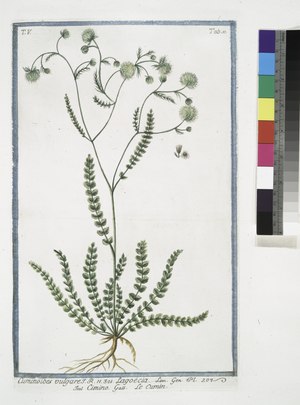
- Lagoecia Vorlage:Person: Sie enthält nur eine Art:
- Hasenkümmel (Lagoecia cuminoides Vorlage:Person): Sie ist vom Mittelmeerraum bis Westasien verbreitet.[8]
- Lipskya Vorlage:Person: Sie enthält nur eine Art:
- Lipskya insignis Vorlage:Person: Sie ist in Zentralasien verbreitet.
- Mogoltavia Vorlage:Person: Die etwa zwei Arten sind in Zentralasien verbreitet.
- Muretia Vorlage:Person: Die bis zu fünf Arten sind vom südlichen Russland über West- bis Zentralasien verbreitet.
- Notiosciadium Vorlage:Person: Sie enthält nur eine Art:
- Notiosciadium pampicola Vorlage:Person: Sie kommt in Argentinien vor.
- Oedibasis Vorlage:Person: Die etwa vier Arten sind in Zentralasien verbreitet.
- Oliveria Vorlage:Person: Sie enthält nur eine Art:[29]
- Oliveria decumbens Vorlage:Person: Sie ist von Syrien bis zum Iran verbreitet.
- Oreoschimperella Vorlage:Person (Syn.: Schimperella Vorlage:Person)
- Ormopterum Vorlage:Person: Die etwa zwei Arten sind von Zentralasien bis Pakistan verbreitet.
- Palimbia Vorlage:Person: Die etwa drei Arten sind vom südlichen sowie östlichen Russland bis Zentralasien verbreitet.[45]
- Postiella Vorlage:Person: Sie enthält nur eine Art:
- Postiella capillifolia Vorlage:Person: Sie kommt in der Türkei vor.
- Pyramidoptera Vorlage:Person: Sie enthält nur eine Art:
- Pyramidoptera cabulica Vorlage:Person: Sie kommt in Afghanistan vor.
- Scaligeria Vorlage:Person (Syn: Albovia Vorlage:Person): Die etwa 14 Arten kommen vom Mittelmeerraum bis nach Zentralasien vor.
- Schrenkia Vorlage:Person: Die etwa zwölf Arten sind in Zentralasien verbreitet.
- Schtschurowskia Vorlage:Person: Die etwa zwei Arten sind in Zentralasien verbreitet.
- Schulzia Vorlage:Person: Die etwa vier Arten sind in Zentralasien bis ins nordwestliche Indien verbreitet.
- Sison Vorlage:Person: Die zwei oder drei Arten sind im Mittelmeerraum in West- sowie Südeuropa und im Kaukasusraum verbreitet. Eine Art ist beispielsweise in Australien, Ozeanien sowie im Nahen Osten ein Neophyt.
- Tamamschjanella Vorlage:Person: Die drei bis vier Arten sind von der Balkanhalbinsel bis zum Kaukasusraum und Südwestasien verbreitet.[24]
.jpg)

- Tribus Saniculeae Vorlage:Person: Sie wird bei vielen Autoren in eine Unterfamilie Saniculoideae Vorlage:Person gestellt. Sie enthält etwa acht Gattungen mit etwa 333 Arten:[2]
- Actinolema Vorlage:Person: Die etwa zwei Arten sind in Südwestafrika verbreitet.
- Alepidea Vorlage:Person: Die 23 bis 40 Arten sind in Afrika verbreitet. Die meisten Arten kommen im südlichen Afrika vor, ein Schwerpunkt der Artenvielfalt ist mit über 20 Arten Südafrika.
- Arctopus Vorlage:Person: Die nur drei Arten kommen in den südafrikanischen Provinzen Nord-, Ost- sowie Westkap vor.[46]
- Sterndolde (Astrantia Vorlage:Person): Die etwa zehn Arten sind vorwiegend von Europa bis zum Kaukasusraum verbreitet.
- Mannstreu (Eryngium Vorlage:Person): Die etwa 230 bis zu 250 Arten sind in allen gemäßigten und warmen Gebieten verbreitet, vorwiegend in Zentralamerika und Südamerika.
- Hacquetia Vorlage:Person (Syn.: Dondia Vorlage:Person): Sie enthält nur eine Art:
- Schaftdolde (Hacquetia epipactis Vorlage:Person): Sie kommt in Österreich, in Tschechien, Polen, in der Slowakei, Italien und im früheren Jugoslawien vor.
- Petagnaea Vorlage:Person (Syn.: Petagnia Vorlage:Person): Sie enthält nur eine Art:
- Petagnaea gussonei Vorlage:Person: Sie ist ein Endemit im nordöstlichen Teil Siziliens und gedeiht auf Höhenlagen von 240 bis 1500 Metern nur in den Nebrodi Bergen. Die isolierten Bestände dieser bei der IUCN „Endangered“ = „stark gefährdet“ bewertete Art nehmen durch Wasserentnahme aus dem Gebiet ab.[47]
- Sanikel (Sanicula Vorlage:Person): Die 37 bis 40 Arten sind hauptsächlich in Nordamerika und Ostasien verbreitet; eine Art kommt in Mitteleuropa vor.


- Tribus Scandiceae Vorlage:Person: Sie enthält mehrere Subtriben und Kladen:[2][48]
- Untertribus Artediinae Vorlage:Person: Sie war als Klade 2010 erkannt und als Tribus 2019 aufgestellt. Sie enthält nur eine monotypische Gattung:[2][48]
- Artedia Vorlage:Person: Sie enthält nur eine Art:[48]
- Artedia squamata Vorlage:Person: Diese einjährige Pflanze ist vom östlichen Mittelmeerraum bis zum Nahen Osten,[48] beispielsweise in Zypern sowie Südwestasien verbreitet.
- Artedia Vorlage:Person: Sie enthält nur eine Art:[48]
- Untertribus Daucinae Vorlage:Person: Sie enthält etwa 15 Gattungen:[49][2][48]
- Ammodaucus Vorlage:Person: Sie enthält nur eine Art:
- Ammodaucus leucotrichus Vorlage:Person: Sie kommt in Algerien und auf den Kanaren vor.
- Cuminum Vorlage:Person: Die etwa vier Arten sind vom Mittelmeerraum bis zum Sudan und Zentralasien verbreitet, beispielsweise:
- Kreuzkümmel (Cuminum cyminum Vorlage:Person)
- Möhren (Daucus Vorlage:Person, Syn.: Agrocharis Vorlage:Person, Ammiopsis Vorlage:Person, Anisactis Vorlage:Person, Chrysodaucus Vorlage:Person, Heterosciadium Vorlage:Person, Melanoselinum Vorlage:Person, Monizia Vorlage:Person, Platyspermum Vorlage:Person, Pomelia Vorlage:Person): Nach molekulargenetischen Untersuchungen und morphologischen Vergleichen der Früchte wurde der Umfang der Gattung Daucus wesentlich erweitert. Nach Banasiak wurde 2016 Daucus s. l. in mehrere Sektionen gegliedert und enthält mindestens 40 Arten[49] fast weltweit, weitere Arten kamen 2019 hinzu.[48] Davor hat die Daucus s. str. etwa 28 Arten, die in Eurasien, Afrika, Australien, Neuseeland und in der Neuen Welt verbreitet sind.
- Ekimia Vorlage:Person: Sie enthält seit 2016 zwei Arten, die bisher bei der Gattung Laserpitium eingeordnet waren.[49] Auch nach der Erstbeschreibung einer Art 2018 gibt es 2018 immer noch nur zwei Arten, denn zwei Arten verbleiben doch in Laserpitium.[50]
- Laser Vorlage:Person: Sie enthält seit 2016 etwa sieben Arten,[49] beispielsweise:
- Engelwurz-Laserkraut (Laser archangelica Vorlage:Person, Syn.: Laserpitium archangelica Vorlage:Person): Diese Neukombination erfolgte 2016.[49] Es ist im östlichen Mitteleuropa und auf der nördlichen Balkanhalbinsel im Bergland verbreitet.[8]
- Rosskümmel (Laser trilobum Vorlage:Person): Sie in kommt Europa und Westasien vor.
- Laserkräuter (Laserpitium Vorlage:Person): Die seit 2016 nur noch etwa 30 Arten (einige Arten wurden in andere Gattungen gestellt)[49] kommen von den Kanarischen Inseln durch Europa bis Südwestasien vor.
- Strahldolde (Orlaya Vorlage:Person): Die etwa drei Arten kommen von Südosteuropa bis Zentralasien vor, beispielsweise mit der Art:
- Strahlen-Breitsame (Orlaya grandiflora Vorlage:Person)
- Pachyctenium Vorlage:Person: Sie enthält nur eine Art:
- Pachyctenium mirabile Vorlage:Person: Sie kommt in Libyen und Äthiopien vor.
- Polylophium Vorlage:Person: Die etwa fünf Arten sind in Westasien verbreitet.
- Pseudorlaya Vorlage:Person: Die etwa drei Arten kommen in Europa und im Mittelmeerraum bis Westasien vor.
- Silphiodaucus Vorlage:Person (Syn.: Daucus sect. Silphiodaucus Koso-Pol.): Sie hat seit 2016 den Rang einer Gattung und wurde aus der Gattung Daucus ausgegliedert. Sie enthält etwa zwei Arten.[49]
- Thapsia Vorlage:Person: Die seit 2016 etwa acht Arten[49] sind im Mittelmeerraum verbreitet. Darunter:
- Gargano-Purgierdolde (Thapsia garganica Vorlage:Person)
- Behaarte Purgierdolde (Thapsia villosa Vorlage:Person)
- Tornabenea Vorlage:Person: Die früher etwa fünf Arten sind Endemiten auf den Kapverdischen Inseln.[9] Drei Arten wurden 2019 in die Gattung Daucus gestellt.[48]
- Ammodaucus Vorlage:Person: Sie enthält nur eine Art:
- Untertribus Ferulinae Vorlage:Person:[2]
- Steckenkräuter (Ferula Vorlage:Person): Sie enthält etwa 170 Arten, die vom Mittelmeergebiet bis Zentralasien vorkommen. (Syn.: Dorema Vorlage:Person, Leutea Vorlage:Person, Soranthus Vorlage:Person, Schumannia Vorlage:Person, Talassia Vorlage:Person)
- Autumnalia Vorlage:Person: Die nur zwei Arten sind im Nahen Osten verbreitet.
- Fergania Vorlage:Person: Sie enthält nur eine Art:
- Fergania polyantha Vorlage:Person: Sie ist in Zentralasien verbreitet.
- Kafirnigania Vorlage:Person: Sie enthält nur eine Art:
- Kafirnigania hissarica Vorlage:Person: Sie kommt in Tadschikistan vor.
- Glaucosciadium-Klade: Sie enthält nur eine Gattung:[2]
- Glaucosciadium Vorlage:Person (Syn.: Mozaffariania Vorlage:Person): Sie enthält zwei Arten in Südwestasien.
- Untertribus Scandicinae Vorlage:Person: Sie enthält etwa zwölf Gattungen mit etwa 110 Arten:[51][2][48]
- Kerbel (Anthriscus Vorlage:Person): Die etwa neun Arten kommen in Eurasien und Nordafrika vor; der Verbreitungsschwerpunkt liegt im nordöstlichen Mittelmeerraum und in der Kaukasusregion.
- Augenwurzen (Athamanta Vorlage:Person, Syn.: Portenschlagia Vorlage:Person, Portenschlagiella Vorlage:Person, Tinguarra Vorlage:Person): Die fünf bis acht Arten sind in Europa, auf den Kanarischen Inseln und in Nordafrika verbreitet; Verbreitungsschwerpunkt ist Italien und die Balkanhalbinsel, beispielsweise:
- Alpen-Augenwurz (Athamanta cretensis Vorlage:Person): Das Verbreitungsgebiet erstreckt sich von Spanien über die Alpen und den Jura bis zum nördlichen Balkan.
- Chaerophyllopsis Vorlage:Person: Sie enthält nur eine Art:
- Chaerophyllopsis huai Vorlage:Person: Sie gedeiht in Höhenlagen von 3600 bis 3800 Metern in Yunnan (nur in Binchuan) sowie in südöstlichen autonomen Gebiet Tibet (nur in Zayü).[10]
- Kälberkröpfe (Chaerophyllum Vorlage:Person, Syn.: Myrrhoides Vorlage:Person, Oreomyrrhis Vorlage:Person, Caldasia Vorlage:Person, Chrysophae Vorlage:Person, Physocaulis Vorlage:Person): Die etwa 40 Arten kommen vorwiegend in Eurasien und mit wenigen Arten in Nordamerika und Nordafrika vor.
- Conopodium Vorlage:Person (Syn.: Balansaea Vorlage:Person, Butinia Vorlage:Person, Heterotaenia Vorlage:Person): Die etwa fünf Arten sind in Europa und dem nördlichen Afrika verbreitet mit Schwerpunkt im westlichen Mittelmeerraum; beispielsweise:
- Französische Erdkastanie (Conopodium majus Vorlage:Person): Die Heimat ist neben dem westlichen Mittelmeerraum Italien, Frankreich, Belgien, Deutschland, Großbritannien, Dänemark und Norwegen.
- Geocaryum Vorlage:Person (Syn.: Biasolettia Vorlage:Person, Freyera Vorlage:Person, Huetia Vorlage:Person): Die 13 bis 15 Arten sind im Mittelmeerraum (Südeuropa sowie auf der Balkanhalbinsel) und in Südwestasien verbreitet.
- Kozlovia Vorlage:Person (Syn.: Albertia Vorlage:Person, Krasnovia Vorlage:Person, Neoconopodium Vorlage:Person): Die etwa vier Arten sind in Zentralasien und in der Himalaya-Region verbreitet.
- Myrrhis Vorlage:Person: Es gibt nur eine Art:
- Süßdolde (Myrrhis odorata Vorlage:Person): Sie in kommt Mittel- und Südeuropa vor.
- Osmorhiza Vorlage:Person (Syn.: Elleimataenia Vorlage:Person, Glycosma Vorlage:Person, Uraspermum Vorlage:Person nom. rej.[10], Washingtonia Vorlage:Person, nom. inval.): Die etwa zehn Arten haben den Verbreitungsschwerpunkt in Nordamerika, lediglich eine Art kommt im östlichen Asien vor.[52]
- Scandix Vorlage:Person (Syn.: Cyclotaxis Vorlage:Person, Scandicium Vorlage:Person): Die etwa 20[10] Arten sind in Eurasien und Afrika verbreitet mit Verbreitungsschwerpunkt im östlichen Mittelmeerraum; beispielsweise:
- Venuskamm (Scandix pecten-veneris Vorlage:Person)
- Sphallerocarpus Vorlage:Person: Sie enthält nur eine Art:
- Sphallerocarpus gracilis Vorlage:Person: Sie ist im östlichen Asien mit Sibirien, in der Mongolei, China und Japan weitverbreitet.
- Todaroa Vorlage:Person: Sie enthält nur eine Art:
- Todaroa aurea Vorlage:Person: Sie kommt nur auf den Kanarischen Inseln vor.
- Untertribus Torilidinae Vorlage:Person: Sie enthält etwa neun Gattungen:[2]
- Astrodaucus Vorlage:Person: Die etwa drei Arten kommen vom östlichen Mittelmeergebiet bis zur Ukraine und zum Iran vor.
- Haftdolden (Caucalis Vorlage:Person): Die etwa eine bis zu vier Arten sind in Eurasien verbreitet, beispielsweise mit der Art:
- Möhren-Haftdolde (Caucalis platycarpos Vorlage:Person)
- Glochidotheca Vorlage:Person: Es gibt nur eine Art:
- Glochidotheca foeniculacea Fenzl: Sie im kommt östlichen Mittelmeerraum vor.
- Lisaea Vorlage:Person: Die etwa vier Arten kommen im östlichen Mittelmeerraum bis Südwestasien vor.
- Szovitsia Vorlage:Person: Es gibt nur eine Art:
- Szovitsia callicarpa Vorlage:Person: Sie kommt im Kaukasusraum, in Armenien und im Iran vor.
- Borstendolden oder Klettenkerbel (Torilis Vorlage:Person, Syn.: Chaetosciadium Vorlage:Person): Die etwa 20 Arten kommen von den Kanarischen Inseln über Vorderasien bis nach Ostasien vor.
- Turgenia Hoffm.: Es gibt nur eine Art:
- Klettendolde (Turgenia latifolia Vorlage:Person): Sie kommt vom Mittelmeergebiet bis Zentralasien vor.
- Yabea Vorlage:Person: Sie enthält nur eine Art:
- Yabea microcarpa Vorlage:Person: Sie ist von Kanada über die USA bis Mexiko verbreitet.
- Untertribus Artediinae Vorlage:Person: Sie war als Klade 2010 erkannt und als Tribus 2019 aufgestellt. Sie enthält nur eine monotypische Gattung:[2][48]


- Tribus Selineae Vorlage:Person:[2]
- Haupt-Klade:
- Aethusa Vorlage:Person: Sie enthält nur eine Art:
- Hundspetersilie (Aethusa cynapium Vorlage:Person): Das Verbreitungsgebiet reicht von Europa bis Vorderasien.
- Ammoselinum Vorlage:Person: Die etwa fünf Arten sind im südwestlichen Nordamerika verbreitet.
- Engelwurzen (Angelica Vorlage:Person s. l., Syn.: Coelopleurum Vorlage:Person, Czernaevia Vorlage:Person, Sphenosciadium Vorlage:Person, Melanosciadium Vorlage:Person, Angelocarpa Vorlage:Person, Angelophyllum Vorlage:Person, Archangelica Vorlage:Person, Callisace Vorlage:Person, Epikeros Vorlage:Person, Gomphopetalum Vorlage:Person, Melanosciadium Vorlage:Person, Physolophium Vorlage:Person, Porphyroscias Vorlage:Person): Die heute etwa 110 (früher bis zu 200) Arten sind hauptsächlich auf der Nordhalbkugel Eurasien sowie in Nordamerika (etwa 24 Arten) verbreitet, etwa 55 Arten gibt es in Ostasien und einige Arten kommen in Afrika vor.[10]
- Apiastrum Vorlage:Person: Sie enthält nur eine Art:
- Apiastrum angustifolium Vorlage:Person: Sie kommt nur in Kalifornien und mexikanischen Baja California vor.
- Carlesia Vorlage:Person: Sie enthält nur eine Art:
- Carlesia sinensis Vorlage:Person: Sie kommt in Korea und in den chinesischen Provinzen südliches Liaoning sowie nordöstliches Shandong vor.[10]
- Hirschwurzen (Cervaria Vorlage:Person, manchmal in Peucedanum, Syn.: Libanotis Vorlage:Person nom. rejic., Peucedanon Vorlage:Person): Die drei bis vier Arten sind von Europa über die Kaukasusregion und Südwest- bis Zentralasien verbreitet, beispielsweise:
- Hirschwurz-Haarstrang (Cervaria rivini Vorlage:Person, Syn.: Peucedanum cervaria Vorlage:Person, Selinum cervaria Vorlage:Person)[2]
- Chymsydia Vorlage:Person: Die nur zwei Arten kommen in Transkaukasien vor.
- Cnidiocarpa Vorlage:Person: Die etwa sechs Arten sind von Kleinasien und den Kaukasusraum bis Zentralasien verbreitet.
- Brenndolden (Cnidium Vorlage:Person, manchmal in Selinum): Die die je nach Autor vier bis zehn Arten sind in Eurasien verbreitet.[10]
- Cortia Vorlage:Person: Die etwa drei Arten kommen im Himalaja vor.
- Cortiella Vorlage:Person: Die etwa drei Arten sind vom nordöstlichen Indien über, Sikkim, Bhutan sowie Nepal bis autonomen Gebiet Xizang verbreitet. In Tibet gibt es alle drei Arten, eine davon nur dort.[10]
- Dichoropetalum Vorlage:Person (Syn.: Holandrea Vorlage:Person, Johreniopsis Vorlage:Person, Chabrea Vorlage:Person, Schlosseria Vorlage:Person): Die etwa 26 Arten sind in Eurasien und im nordwestlichen Afrika verbreitet.[8] Hierher gehört auch:
- Kümmel-Haarstrang (Dichoropetalum carvifolia Vorlage:Person; Syn.: Peucedanum carvifolia Vorlage:Person)
- Dimorphosciadium Vorlage:Person: Die nur zwei Arten sind in Zentralasien verbreitet.
- Dystaenia Vorlage:Person: Die nur zwei Arten sind in Japan beheimatet.
- Endressia Vorlage:Person: Die etwa zwei Arten im nördlichen Spanien und in den Pyrenäen beheimatet.
- Exoacantha Vorlage:Person: Es gibt nur eine oder zwei Arten in Syrien und im Iran.
- Ferulopsis Vorlage:Person: Die nur zwei Arten sind im nördlichen Asien und in Zentralasien verbreitet.
- Glehnia Vorlage:Person (Syn.: Phellopterus Vorlage:Person): Die nur eine Art kommt im östlichen Ostasien und im westlichen Nordamerika vor.
- Johrenia Vorlage:Person: Die etwa 20 Arten sind in Europa und Südwest- bis Zentralasien verbreitet.
- Kadenia Vorlage:Person: Die ein oder zwei Arten sind in Eurasien verbreitet.
- Kailashia Vorlage:Person: Die etwa zwei Arten kommen im autonomen Gebiet Xizang und im Indien nur im westlichen Himalaja vor.
- Karatavia Vorlage:Person: Sie enthält nur eine Art:
- Karatavia kultiassovii Vorlage:Person: Sie kommt im südlichen Kasachstan im Alatau vor.
- Katapsuxis Vorlage:Person: Sie enthält nur eine Art:
- Katapsuxis silaifolia Vorlage:Person: Sie ist von West- über Süd- sowie Südwesteuropa bis Südwestasien verbreitet.
- Kedarnatha Vorlage:Person: Die etwa fünf Arten kommen vom Himalaja bis Myanmar verbreitet.
- Kitagawia Vorlage:Person: Die etwa neun Arten sind in Asien verbreitet.
- Ledebouriella Vorlage:Person: Die etwa zwei Arten sind in Zentralasien verbreitet.
- Libanotis Vorlage:Person: Die etwa 17 Arten sind in Eurasien verbreitet.
- Ligusticopsis Vorlage:Person: Die etwa 18 Arten sind in Zentral- sowie Ostasien verbreitet.
- Lomatocarpa Vorlage:Person: Die etwa zwei Arten sind in Zentralasien, Afghanistan sowie Pakistan verbreitet.
- Lomatocarum Vorlage:Person: Sie enthält nur eine Art:
- Lomatocarum alpinum Vorlage:Person (Syn.: Carum alpinum Vorlage:Person, Carum saxicola Vorlage:Person): Sie wurde 2012 aus Carum ausgegliedert und ist im Kaukasusraum verbreitet.[24]
- Macrosciadium Vorlage:Person: Diese Gattung wurde 1988 mit zwei Arten, die zuvor zu Ligusticum Vorlage:Person gehörten, aufgestellt. Sie sind von der Türkei bis zum Kaukasusraum verbreitet.
- Magadania Vorlage:Person: Die etwa zwei Arten sind im nordöstlichen Asien verbreitet.
- Oligocladus Vorlage:Person: Sie enthält nur eine Art:
- Oligocladus patagonicus Vorlage:Person (Syn.: Aulosolena patagonica Vorlage:Person, Oligocladus andinus Vorlage:Person, Sanicula patagonica Vorlage:Person): Sie gedeiht in der Pampa Südamerikas.
- Oreocome Vorlage:Person: Die etwa zehn Arten sind von Afghanistan über den Himalaja bis China und Vietnam verbreitet.
- Oreoselinum Vorlage:Person: Sie enthält nur eine Art:
- Berg-Haarstrang (Oreoselinum nigrum Vorlage:Person, Syn.: Athamanta oreoselinum Vorlage:Person, Peucedanum oreoselinum Vorlage:Person): Sie ist in Europa verbreitet.
- Ormosolenia Vorlage:Person: Sie enthält nur eine Art:
- Ormosolenia alpina Vorlage:Person (Syn.: Peucedanum alpinum Vorlage:Person, Ormosolenia cretica Vorlage:Person nom. illeg., Sison alpinus Vorlage:Person): Sie kommt auf Kreta und in Südwestasien vor.[53]
- Paraligusticum Vorlage:Person: Sie enthält nur eine Art:
- Paraligusticum discolor Vorlage:Person: Sie ist in Zentralasien verbreitet.
- Haarstrang (Peucedanum Vorlage:Person, inkl. Imperatoria Vorlage:Person): Die 100 bis 200 Arten sind in Eurasien und Afrika verbreitet. Es gibt Autoren, bei denen nur noch acht bis zehn Arten in dieser Gattung enthalten sind.
- Phlojodicarpus Vorlage:Person: Die etwa vier Arten sind in Sibirien verbreitet.
- Pilopleura Vorlage:Person: Die etwa zwei Arten sind in Zentralasien verbreitet.
- Pteroselinum Vorlage:Person (manchmal in Peucedanum Vorlage:Person): Die nur ein oder zwei Arten sind in Europa verbreitet.
- Rumia Vorlage:Person: Je nach Autor mit wenigen oder nur einer Art:
- Rumia crithmifolia Vorlage:Person: Es ist ein Endemit auf der Krim.
- Sajanella Vorlage:Person (Syn.: Sajania Vorlage:Person): Sie enthält nur eine Art:
- Sajanella monstrosa Vorlage:Person (Syn.: Athamanta monstrosa Vorlage:Person, Sajania monstrosa Vorlage:Person): Sie ist im nördlichen Asien und in Zentralasien verbreitet.
- Saposhnikovia Vorlage:Person: Sie enthält nur eine Art:
- Saposhnikovia divaricata Vorlage:Person: Sie ist im nördlichen Asien, in Zentral- und Ostasien verbreitet.
- Siculosciadium Vorlage:Person: Sie wurde 2013 neu aufgestellt und enthält nur eine Art:
- Siculosciadium nebrodense Vorlage:Person (Syn.: Peucedanum nebrodense Vorlage:Person): Es ist ein Endemit auf Sizilien.[54]
- Silgen (Selinum Vorlage:Person): Die etwa fünf Arten sind in Eurasien verbreitet, beispielsweise mit:
- Kümmelblättrige Silge (Selinum carvifolia Vorlage:Person)
- Gewöhnliche Brenndolde (Selinum dubium Vorlage:Person)
- Silaublättrige Brenndolde (Selinum silaifolium Vorlage:Person)
- Bergfenchel (Seseli Vorlage:Person, Syn.: Elaeopleurum Vorlage:Person, Pseudammi Vorlage:Person): Die bis zu 65 (100 bis 120) Arten sind von Europa bis Zentralasien verbreitet.
- Sillaphyton Vorlage:Person: Sie wurde 2016 aufgestellt und enthält nur eine Art:[55]
- Sillaphyton podagraria Vorlage:Person (Syn.: Peucedanum podagraria Vorlage:Person, Peucedanum insolens Vorlage:Person): Dieser seltene Endemit kommt nur im mittleren Teil der Koreanischen Halbinsel vor.[55]
- Spermolepis Vorlage:Person: Die fünf bis sechs Arten sind in Nordamerika verbreitet, eine kommt in Argentinien und eine auf Hawaii vor.
- Stenocoelium Vorlage:Person: Die etwa drei Arten sind im nördlichen Asien und in Zentralasien verbreitet.
- Thecocarpus Vorlage:Person: Sie enthält etwa zwei Arten, darunter:
- Thecocarpus carvifolius Vorlage:Person: Sie kommt in der Türkei vor.[8]
- Thysselinum Vorlage:Person: Die nur zwei Arten sind von Europa bis ins nördliche Asien verbreitet. Sie werden meist zu Peucedanum gestellt.[8]
- Tommasinia Vorlage:Person: Sie enthält nur eine Art:
- Quirl-Haarstrang oder Riesen-Haarstrang (Tommasinia verticillaris Vorlage:Person, Syn.: Peucedanum verticillare Vorlage:Person): Er ist in Europa hauptsächlich in den Alpen verbreitet.
- Faserschirme (Trinia Vorlage:Person, Syn.: Triniella Vorlage:Person): Die etwa sechs Arten kommen in Europa bis Zentralasien vor, beispielsweise:
- Blaugrüner Faserschirm (Trinia glauca Vorlage:Person)
- Vicatia Vorlage:Person: Die etwa drei Arten sind in Asien verbreitet.
- Xanthogalum Vorlage:Person: Die etwa drei Arten sind im Kaukasus und in Vorderasien verbreitet.
- Xanthoselinum Vorlage:Person: Sie enthält nur eine oder zwei Arten mit einem weiten Verbreitungsgebiet von Europa über den Kaukasusraum bis Zentralasien, darunter:
- Elsässer Haarstrang (Xanthoselinum alsaticum Vorlage:Person, Syn.: Peucedanum alsaticum Vorlage:Person)
- Aethusa Vorlage:Person: Sie enthält nur eine Art:
- Rein nordamerikanische Klade mit ausdauernden krautigen Pflanzenarten:[2]: Diese rein nordamerikanische Klade enthält etwa 20 Gattungen mit etwa 200 Arten hauptsächlich im westlichen Nordamerika. Mehr als die Hälfte der Arten gehören zu den beiden Gattungen Lomatium und Cymopterus. Die größte Artenvielfalt gibt es westlich des Mississippi River. Viele Arten gedeihen an offenen Standorten der Intermountain sowie Pacific West Bergketten. Viele Arten sind an Trockenheit angepasste Geophyten:[56]
- Aletes Vorlage:Person: Die 15 bis 20 Arten sind in Nordamerika verbreitet.
- Cymopterus Vorlage:Person: Die 32 bis 50 Arten sind im westlichen Nordamerika verbreitet.
- Eurytaenia Vorlage:Person: Die nur zwei Arten sind in den südlichen zentralen USA verbreitet.
- Harbouria Vorlage:Person: Es gibt nur eine Art:
- Harbouria trachypleura Vorlage:Person: Sie kommt in den südwestlichen USA vor.
- Lomatium Vorlage:Person: Die 63 bis 74 Arten im westlichen Nordamerika verbreitet.
- Musineon Vorlage:Person: Die drei bis vier Arten sind im westlichen Nordamerika verbreitet.
- Neoparrya Vorlage:Person: Es gibt nur eine Art:
- Neoparrya megarrhiza Vorlage:Person: Sie kommt in den südwestlichen USA vor.
- Oreonana Vorlage:Person: Die zwei bis drei Arten gedeihen in den kalifornischen Bergen.
- Oreoxis Vorlage:Person: Die drei bis vier Arten sind im westlichen Nordamerika verbreitet.
- Orogenia Vorlage:Person: Die etwa zwei Arten sind im westlichen Nordamerika verbreitet.
- Podistera Vorlage:Person: Die drei bis vier Arten sind im westlichen Nordamerika verbreitet.
- Polytaenia Vorlage:Person (Syn.: Pleiotaenia Vorlage:Person): Sie enthält seit 2012 mit der Erstbeschreibung einer neuen Art aus Texas drei Arten, die in Texas, Louisiana, Kentucky, Michigan, Iowa und südlichen Oklahoma vorkommen.[57]
- Pseudocymopterus Vorlage:Person: Die zwei bis sieben Arten sind im südwestlichen Nordamerika verbreitet.
- Pteryxia Vorlage:Person: Die etwa fünf Arten sind im westlichen Nordamerika verbreitet.
- Shoshonea Vorlage:Person: Es gibt nur eine Art:
- Shoshonea pulvinata Vorlage:Person: Die Heimat ist Wyoming.
- Taenidia Vorlage:Person: Die etwa zwei Arten kommen im östlichen Nordamerika vor.
- Tauschia Vorlage:Person: Die 22 bis Arten sind in Nord- oder Mittelamerika verbreitet.
- Thaspium Vorlage:Person: Die drei bis fünf Arten sind in Nordamerika verbreitet.
- Vesper Vorlage:Person: Diese Gattung wurde 2012 aufgestellt. Die etwa sechs Arten wurden aus der Gattung Cymopterus Vorlage:Person ausgegliedert und sind in Nordamerika verbreitet.[58]
- Zizia Vorlage:Person: Die etwa vier Arten sind im östlichen Nordamerika verbreitet.
- Haupt-Klade:

- Sinodielsia-Klade: Die 10 bis 15 Gattungen mit etwa 50 Arten gedeihen in den gemäßigten bis alpinen Gebieten der Nordhalbkugel, mit der größten Artenvielfalt in Zentralasien, im Himalajas und in China:[22]
- Cenolophium Vorlage:Person: Sie enthält nur eine Art:
- Cenolophium denudatum Vorlage:Person: Sie ist in Osteuropa und im gemäßigten Asien verbreitet.
- Schierlingssilge (Conioselinum Vorlage:Person): Die etwa 18 Arten sind Osteuropa, im gemäßigten Asien und Nordamerika verbreitet.
- Kuramosciadium Vorlage:Person: Sie wurde 2011 aufgestellt und enthält nur eine Art:
- Kuramosciadium corydalifolium Vorlage:Person: Diese monokarpe mehrjährige krautige Pflanze blüht im Juni. Sie ist nur von zwei Fundorten in Höhenlagen von 2700 bis 2900 Metern im westlichen Tian Shan in Usbekistan bekannt. Sie wird in der usbekischen Roten Liste der gefährdeten Arten als „Endangered“ = „stark gefährdet“ bewertet.[59]
- Levisticum Vorlage:Person (Syn.: Hipposelinum Vorlage:Person): Die ein bis etwa drei Arten sind in Afghanistan, dem südwestlichen Asien, Europa und Nordamerika verbreitet[10]; mit beispielsweise
- Liebstöckel (Levisticum officinale Vorlage:Person): Die ursprüngliche Heimat liegt im westlichen Asien.
- Lithosciadium Vorlage:Person: Die nur zwei Arten sind im nördlichen Asien und Zentralasien und westliche China verbreitet:[10]
- Lithosciadium kamelinii Vorlage:Person: Sie kommt in der Mongolei und nördlichen Xinjiang vor.[10]
- Lithosciadium multicaule Vorlage:Person
- Paulita Vorlage:Person: Die etwa drei Arten sind in Mittelasien verbreitet.
- Pterocyclus Vorlage:Person (manchmal in Pleurospermum Vorlage:Person): Die etwa vier Arten sind vom Himalaja bis ins südwestliche China verbreitet.
- Seselopsis Vorlage:Person: Die etwa zwei Arten sind in Mittelasien verbreitet.
- Silaum Vorlage:Person (Syn.: Silaus Vorlage:Person): Sie hat früher bis zu zehn Arten enthalten und enthält fünf oder nur noch eine Art:
- Gewöhnliche Wiesensilge (Silaum silaus Vorlage:Person): Sie ist im gemäßigten Eurasien verbreitet.[8]
- Sinodielsia Vorlage:Person: Die zwei bis drei Arten kommen im südöstlichen Tibet sowie in Yunnan vor.
- Sphaenolobium Vorlage:Person: Die etwa drei Arten sind in Mittelasien verbreitet.
- Cenolophium Vorlage:Person: Sie enthält nur eine Art:

- Tribus Smyrnieae Vorlage:Person: Sie enthält nur zwei Gattungen[2] mit etwa acht Arten von Europa über den Mittelmeerraum bis Iran:
- Lecokia Vorlage:Person: Sie enthält nur eine Art:
- Kretische Lecokie (Lecokia cretica Vorlage:Person): Sie kommt von Kreta bis zum Iran vor.
- Gelbdolde (Smyrnium Vorlage:Person): Die etwa sieben Arten sind in Europa und im Mittelmeerraum verbreitet, darunter:
- Pferdeeppich (Smyrnium olusatrum Vorlage:Person).
- Lecokia Vorlage:Person: Sie enthält nur eine Art:

- Tribus Steganotaenieae Vorlage:Person:[13] Sie wird bei vielen Autoren in eine Unterfamilie Saniculoideae Vorlage:Person gestellt. Sie enthält nur zwei Gattungen mit nur zwei bis drei Arten.[2] Es sind verholzende Pflanzen:
- Polemanniopsis Vorlage:Person: Diese Gattung war bis 2010 monotypisch mit einer Art (Polemanniopsis marlothii Vorlage:Person), die nur in den südafrikanischen Provinzen Nordkap sowie Westkap vorkommt, bis eine neue Art (Polemanniopsis namibensis Vorlage:Person) aus Namibia beschrieben wurde.[60]
- Steganotaenia Vorlage:Person: Die etwa zwei Baum-Arten sind im tropischen Afrika verbreitet.

- Tribus Tordylieae Vorlage:Person: Sie enthält seit 2010 eine Untertribus und zwei Kladen:[2][61]
- ohne Einordnung in Tribus/Klade:
- Stenotaenia Vorlage:Person:[29] Die fünf bis sechs Arten sind in Südwestasien verbreitet.
- Untertribus Tordyliinae Vorlage:Person (Syn.: Tribus Heracleeae):[2]
- Bärenklau (Heracleum Vorlage:Person): Die etwa 60 Arten sind in den gemäßigten Zonen der Nordhalbkugel und in den Tropen im Gebirge verbreitet.
- Kandaharia Vorlage:Person: Sie enthält nur eine Art:
- Kandaharia rechingerorum Vorlage:Person: Sie kommt nur in Afghanistan vor.
- Lalldhwojia Vorlage:Person: Die zwei oder drei Arten gedeihen im Himalaja von Nepal bis Bhutan.
- Leiotulus Vorlage:Person (manchmal in Pastinaca Vorlage:Person oder Malabaila Vorlage:Person, Syn.: Lophotaenia Vorlage:Person): Sie enthält etwa sechs Arten im Mittelmeerraum.
- Malabaila Vorlage:Person: Die etwa vier Arten sind im östlichen Mittelmeergebiet bis Zentralasien verbreitet.
- Mandenovia Vorlage:Person: Sie enthält nur eine Art:
- Mandenovia komarovii Vorlage:Person: Sie ist im Kaukasusraum verbreitet.
- Pastinaken (Pastinaca Vorlage:Person): Die etwa 14 Arten sind in den gemäßigten Zonen Eurasiens verbreitet.
- Semenovia Vorlage:Person: Die etwa 23 Arten sind in weiten Gebieten Asiens verbreitet.
- Symphyoloma Vorlage:Person: Sie enthält nur eine Art:
- Symphyoloma graveolens Vorlage:Person: Sie ist im Kaukasusraum verbreitet.
- Tetrataenium Vorlage:Person: Die bis zu 24 Arten sind hauptsächlich in Asien verbreitet.
- Tordyliopsis Vorlage:Person: Sie enthält nur eine Art:
- Tordyliopsis brunonis Vorlage:Person: Sie gedeiht im Himalaja.
- Tordylium Vorlage:Person (Syn.: Ainsworthia Vorlage:Person, Synelcosciadium Vorlage:Person): mit 19 Arten,[8] beispielsweise:
- Apulischer Zirmet (Tordylium apulum Vorlage:Person)
- Trigonosciadium Vorlage:Person: Die etwa fünf Arten sind in Südwestasien verbreitet.
- Vanasushava Vorlage:Person: Sie enthält nur eine Art:
- Vanasushava pedata Vorlage:Person: Sie kommt nur im südlichen Indien vor.
- Zosima Vorlage:Person (Syn.: Pichleria Vorlage:Person): Die etwa zehn Arten sind in Westasien verbreitet.
- Cymbocarpum-Klade: Sie enthält nur zwei Gattungen:
- Cymbocarpum Vorlage:Person (Syn.: Kalakia Vorlage:Person): Die etwa fünf Arten sind in Südwestasien verbreitet.
- Ducrosia Vorlage:Person: Die etwa sechs Arten sind in Südwestasien und im nordöstlichen Afrika verbreitet.
- Lefebvrea-Klade:[2] Die etwa zehn Gattungen kommen nur in Afrika vor, das Zentrum der Artenvielfalt ist die Capensis:
- Afroligusticum Vorlage:Person (Sie wurde aus Peucedanum ausgegliedert): Die etwa 13 Arten sind im tropischen Afrika verbreitet.[62]
- Afrosciadium Vorlage:Person (Sie wurde aus Peucedanum ausgegliedert): Die etwa 18 Arten sind in Afrika verbreitet.[62]
- Capnophyllum Vorlage:Person: Die vier Arten gedeihen an der Küste und kommen alle in der südafrikanischen Provinz Westkap vor, eine davon auch im Nordkap.[63][41][64]
- Cynorhiza Vorlage:Person: Die drei Arten sind in Afrika verbreitet.[62]
- Dasispermum Vorlage:Person (Syn.: Sonderina Vorlage:Person): Von den seit 2010 sieben Arten kommen fünf nur in den südafrikanischen Provinzen Ost-, West- sowie Nordkap und zwei auch in KwaZulu-Natal vor.[65]
- Lefebvrea Vorlage:Person (Syn.: Erythroselinum Vorlage:Person): Die etwa zehn Arten sind in Afrika verbreitet.[62]
- Nanobubon Vorlage:Person: Diese Gattung wurde 2008 mit nur zwei Arten aufgestellt und enthält drei Arten alle in der südafrikanischen Provinz Westkap vorkommen, eine davon auch in Ostkap.[62][66]
- Notobubon Vorlage:Person: Die etwa zwölf Arten sind in Afrika verbreitet.[62]
- Scaraboides Vorlage:Person: Sie enthält nur eine Art:
- Scaraboides manningii Vorlage:Person: Es sind nur zwei isolierte Fundorte bekannt in der Sukkulenten-Karoo in den südafrikanischen Provinzen Nord- sowie Westkap.[67]
- Stenosemis Vorlage:Person: Die nur zwei Arten kommen nur in den südafrikanischen Provinzen südliches KwaZulu-Natal und Ostkap vor.[68]
- ohne Einordnung in Tribus/Klade:

.jpg)
- Nicht in einer Tribus eingeordnet sind (incertae sedis):[22]
- Angoseseli Vorlage:Person: Sie enthält nur eine Art:
- Angoseseli mossamedensis Vorlage:Person: Sie kommt in Angola vor.
- Apodicarpum Vorlage:Person: Sie enthält nur eine Art:
- Apodicarpum ikenoi Vorlage:Person: Sie kommt nur im östlichen Japan vor.
- Asciadium Vorlage:Person: Sie enthält nur eine Art:
- Asciadium coronopifolium Vorlage:Person: Sie kommt in Kuba vor.
- Austropeucedanum Vorlage:Person: Sie enthält nur eine Art:
- Austropeucedanum oreopansii Vorlage:Person: Sie kommt im nordwestlichen Argentinien vor.
- Bonannia Vorlage:Person: Sie enthält nur eine Art:
- Bonannia graeca Vorlage:Person: Sie kommt im südlichen Italien sowie im südlichen Griechenland vor.
- Caropsis Vorlage:Person: Sie enthält nur eine Art:
- Caropsis verticillato-inundata Vorlage:Person: Sie ist in Europa verbreitet.
- Cephalopodum Vorlage:Person: Die etwa drei Arten sind in Zentralasien verbreitet.
- Chabrea Vorlage:Person: Sie enthält nur eine Art:
- Chabrea carvifolia Vorlage:Person: Sie ist in Europa verbreitet.
- Coristospermum Vorlage:Person: Die etwa drei Arten sind in Europa verbreitet.
- Cyathoselinum Vorlage:Person: Sie enthält nur eine Art:
- Cyathoselinum tomentosum Vorlage:Person: Sie ist in Südosteuropa verbreitet.
- Distichoselinum Vorlage:Person: Sie enthält nur eine Art:
- Distichoselinum tenuifolium Vorlage:Person: Sie kommt auf der Iberischen Halbinsel vor.
- Elaeoselinum Vorlage:Person: Die etwa vier Arten sind im Mittelmeerraum verbreitet.
- Eriosynaphe Vorlage:Person: Sie enthält nur eine Art:
- Eriosynaphe longifolia Vorlage:Person: Sie ist vom südöstlichen Russland bis Zentralasien verbreitet.
- Erythroselinum Vorlage:Person: Sie enthält nur eine Art:
- Erythroselinum atropurpureum Vorlage:Person: Sie kommt in Äthiopien vor.
- Grafia Vorlage:Person: Es gibt nur eine Art:
- Grafia golaka Vorlage:Person: Sie kommt in dem südöstlichen Alpen, den Apenninen und im früheren Jugoslawien vor.[8]
- Guillonea Vorlage:Person: Sie enthält nur eine Art:
- Guillonea scabra Vorlage:Person: Sie kommt in südlichen und östlichen Spanien vor.
- Haplosciadium Vorlage:Person: Sie enthält nur eine Art:
- Haplosciadium abyssinicum Vorlage:Person: Sie ist von Äthiopien bis zu den Gebirgen Ostafrikas verbreitet.
- Horstrissea Vorlage:Person: Sie enthält nur eine Art:
- Horstrissea dolinicola Vorlage:Person: Sie ist ein auf Dolinen spezialisierter Lokalendemit auf Kreta.[69]
- Kalakia Vorlage:Person: Sie enthält nur eine Art:
- Kalakia marginata Vorlage:Person: Sie kommt im Iran vor.
- Karnataka Vorlage:Person: Sie enthält nur eine Art:
- Karnataka benthamii Vorlage:Person: Sie kommt im südlichen Indien vor.
- Ladyginia Vorlage:Person: Die etwa drei Arten sind von Südwest- bis Zentralasien verbreitet.
- Macroselinum Vorlage:Person: Sie enthält nur eine Art:
- Macroselinum latifolium Vorlage:Person: Sie ist von Südeuropa bis in den Kaukasusraum verbreitet.
- Mastigosciadium Vorlage:Person: Sie enthält nur eine Art:
- Mastigosciadium hysteranthum Vorlage:Person: Sie kommt in Afghanistan vor.
- Microsciadium Vorlage:Person: Sie enthält nur eine Art:
- Microsciadium minutum Vorlage:Person: Sie kommt in der Türkei vor.[8]
- Opoidia Vorlage:Person: Sie enthält nur eine Art:
- Opoidia galbanifera Vorlage:Person: Sie kommt im Iran vor.
- Oreofraga Vorlage:Person nom. inval. (Es gibt keine lateinische Beschreibung in der Erstveröffentlichung, deshalb ist sie, da sie vor 2012 erschienen ist ungültig): Sie enthält nur eine Art:
- Oreofraga morrisiana Vorlage:Person: Es ist ein Endemit auf Sokotra.
- Ormosciadium Vorlage:Person: Sie enthält nur eine Art:
- Ormosciadium aucheri Vorlage:Person: Sie kommt in der östlichen Türkei vor.
- Pancicia Vorlage:Person: Sie enthält nur eine Art:
- Pancicia serbica Vorlage:Person: Sie kommt auf der westlichen Balkanhalbinsel vor.
- Paraselinum Vorlage:Person: Sie enthält nur eine Art:
- Paraselinum weberbaueri Vorlage:Person: Sie kommt in Peru vor.
- Pastinacopsis Vorlage:Person: Sie enthält nur eine Art:
- Pastinacopsis glacialis Vorlage:Person: Sie ist in Zentralasien verbreitet.
- Pedinopetalum Vorlage:Person: Sie enthält nur eine Art:
- Pedinopetalum domingense Vorlage:Person Sie kommt nur auf Hispaniola vor.
- Pinacantha Vorlage:Person: Sie enthält nur eine Art:
- Pinacantha porandica Vorlage:Person: Sie kommt in Afghanistan vor.
- Pinda Vorlage:Person: Sie enthält nur eine Art:
- Pinda concanensis Vorlage:Person: Sie gedeiht in den Western Ghats und im südlichen Indien.
- Polyzygus Vorlage:Person: Sie enthält nur eine Art:
- Polyzygus tuberosus Vorlage:Person: Sie kommt im südlichen Indien vor.
- Portenschlagiella Vorlage:Person: Sie enthält nur eine Art:
- Portenschlagiella ramosissima Vorlage:Person: Sie kommt im südlichen Italien und auf der westlichen Balkanhalbinsel vor.
- Pseudoselinum Vorlage:Person: Sie enthält nur eine Art:
- Pseudoselinum angolense Vorlage:Person: Sie kommt in Angola vor.
- Faltenohr (Ptychotis Vorlage:Person): Sie enthält nur eine oder zwei Arten:
- Ptychotis sardoa Vorlage:Person: Dieser Endemit kommt nur auf Sardinien vor.[8]
- Steinbrech-Faltenohr (Ptychotis saxifraga Vorlage:Person): Sie ist in Zentral- und Südwesteuropa verbreitet.[8]
- Registaniella Vorlage:Person: Es gibt nur eine Art:
- Registaniella hapaxlegomena Vorlage:Person: Sie kommt in Afghanistan vor.
- Rhopalosciadium Vorlage:Person (manchmal in Torilis): Sie enthält nur eine Art:
- Rhopalosciadium stereocalyx Vorlage:Person: Sie kommt im Iran vor.
- Rhysopterus Vorlage:Person: Die etwa drei Arten sind in Nordamerika verbreitet.
- Rouya Vorlage:Person: Sie enthält nur eine Art:
- Rouya polygama Vorlage:Person: Sie ist in Korsika, Sardinien sowie Nordafrika verbreitet.
- Rutheopsis Vorlage:Person: Sie enthält nur eine Art:
- Rutheopsis herbanica Vorlage:Person: Sie kommt auf den kanarischen Inseln Lanzarote sowie Fuerteventura vor.
- Sciothamnus Vorlage:Person: Die etwa vier Arten sind im südlichen Afrika verbreitet.
- Sclerochorton Vorlage:Person: Sie enthält nur eine Art:
- Sclerochorton haussknechtii Vorlage:Person: Sie kommt im Iran vor.
- Sclerotiaria Vorlage:Person: Sie enthält nur eine Art:
- Sclerotiaria pentaceros Vorlage:Person: Sie ist in Zentralasien verbreitet.
- Scrithacola Vorlage:Person: Sie enthält nur eine Art:
- Scrithacola kuramensis Vorlage:Person: Sie ist in Afghanistan, Pakistan verbreitet.
- Selinopsis Vorlage:Person (manchmal in Carum): Die etwa zwei Arten kommen nur im westlichen Nordafrika und vielleicht in Spanien vor.
- Spuriodaucus Vorlage:Person: Die etwa drei Arten sind im tropischen Afrika verbreitet.
- Stewartiella Vorlage:Person: Die nur zwei Arten kommen in Pakistan vor.
- Taeniopetalum Vorlage:Person: Die nur zwei Arten sind von Balkanhalbinsel bis in die Türkei verbreitet.
- Tamamschjania Vorlage:Person: Die nur zwei Arten sind vom nördlichen Griechenland bis in die Türkei verbreitet.[12]
- Thamnosciadium Vorlage:Person: Sie enthält nur eine Art:
- Thamnosciadium junceum Vorlage:Person: Sie kommt in Griechenland vor.
- Trachyspermum Vorlage:Person: Die seit 2019 etwa 15 Arten. Trachyspermum in diesem Umfang eine polyphyletische Gattung.[70] Die Arten gedeihen im tropischen und nordöstlichen Afrika über Südwestasien und in Zentralasien bis Indien und im westlichen China, beispielsweise:
- Ajowan (Trachyspermum ammi Vorlage:Person)
- Radhuni (Trachyspermum roxburghianum Vorlage:Person)
- Tricholaser Vorlage:Person: Die nur zwei Arten sind in Süd- und Südwestasien verbreitet.
- Vvedenskya Vorlage:Person (manchmal in Conioselinum): Sie enthält nur eine Art:
- Vvedenskya pinnatifolia Vorlage:Person: Sie ist in Zentralasien verbreitet.
- Xatardia Vorlage:Person: Sie enthält nur eine Art:
- Xatardia scabra Vorlage:Person: Dieser Endemit kommt nur in den östlichen Pyrenäen vor.[8]
- Angoseseli Vorlage:Person: Sie enthält nur eine Art:
Quellen
- Eintrag bei der APWebsite. (Abschnitte Systematik und Beschreibung)
- Anthony R. Magee, Carolina I. Calviño, Mei (Rebecca) Liu, Stephen R. Downie, Patricia M. Tilney, Ben-Erik van Wyk: New tribal delimitations for the early diverging lineages of Apiaceae subfamily Apioideae. In: Taxon. Band 59, Nr. 2, 2010, S. 567–580 (PDF; 2,3 MB).
- Stephen R. Downie, Krzysztof Spalik, Deborah S. Katz-Downie, Jean-Pierre Reduron: Major clades within Apiaceae subfamily Apioideae as inferred by phylogenetic analysis of nrDNA ITS sequences. In: Plant Diversity and Evolution. Band 128, Nr. 1–2, 2010, S. 111–136, doi:10.1127/1869-6155/2010/0128-0005 (PDF).
- Jan Thomas Johansson: The Phylogeny of Angiosperms. Araliales. Internet-Veröffentlichung, Hortus Bergianus, Stockholm ab 2013, zuletzt eingesehen am 15. Juni 2014. (Abschnitte Systematik und Verbreitung)
Einzelnachweise
- ↑ Urgamal Magsar: Classification System of the family Apiaceae in the Flora of Mongolia. In: Proceedings of the Mongolian Academy of Sciences. Band 52, Nr. 4 (204), 2012, S. 36–41. Volltext-PDF.
- ↑ 2,00 2,01 2,02 2,03 2,04 2,05 2,06 2,07 2,08 2,09 2,10 2,11 2,12 2,13 2,14 2,15 2,16 2,17 2,18 2,19 2,20 2,21 2,22 2,23 2,24 2,25 2,26 2,27 2,28 2,29 2,30 2,31 2,32 2,33 2,34 2,35 2,36 2,37 2,38 2,39 2,40 2,41 2,42 2,43 2,44 2,45 Stephen R. Downie, Krzysztof Spalik, Deborah S. Katz-Downie, Jean-Pierre Reduron: Major clades within Apiaceae subfamily Apioideae as inferred by phylogenetic analysis of nrDNA ITS sequences. In: Plant Diversity and Evolution. Band 128, Nr. 1–2, 2010, S. 111–136, doi:10.1127/1869-6155/2010/0128-0005 (PDF).
- ↑ Stephen R. Downie, G. M. Plunkett, Mark F. Watson, Krzysztof Spalik, Deborah S. Katz-Downie, C. M. Valiejo-Roman, E. I. Terentieva, A. V. Troitsky, B.-Y. Lee, J. Lahham, A. El-Oqlah: Tribes and clades within Apiaceae subfamily Apioideae: the contribution of molecular data. In: Edinburgh Journal of Botany. Band 58, Nr. 2, 2001, S. 301–330, doi:10.1017/S0960428601000658 (PDF; 10,5 MB).
- ↑ F.-J. Sun, Stephen R. Downie, R. L. Hartman: An ITS-based phylogenetic analysis of the perennial, endemic Apiaceae subfamily Apioideae of western North America. In: Systematic Botany. Band 29, Nr. 2, 2004, S. 419–431, doi:10.1600/036364404774195601 (PDF; 412 kB).
- ↑ Anthony R. Magee, C. I. Calviño, M. Liu, Stephen R. Downie, P. M. Tilney, Ben-Erik van Wyk: New tribal delimitations in African Apiaceae. In South African Journal of Botany. Band 75, Nr. 2, 2009, S. 410–411, doi:10.1016/j.sajb.2009.02.077.
- ↑ Rhiannon Peery, Sarah Mathews, Stephen R. Downie: Update on the quest to resolve higher-level relationships in Apiaceae subfamily Apioideae. An Oral Paper: Papers for Sections at Botany 2013 – The annual Botany Conference (Abstract).
- ↑ Feng-Jie Sun, Stephen R. Downie: Phylogenetic analyses of morphological and molecular data reveal major clades within the perennial, endemic western North American Apiaceae subfamily Apioideae. In: The Journal of the Torrey Botanical Society. Band 137, Nr. 2–3, 2010, S. 133–156, doi:10.3159/09-RA-071R.1 (PDF).
- ↑ 8,00 8,01 8,02 8,03 8,04 8,05 8,06 8,07 8,08 8,09 8,10 8,11 8,12 8,13 8,14 8,15 8,16 8,17 8,18 8,19 8,20 8,21 8,22 8,23 8,24 8,25 8,26 8,27 8,28 Vorlage:Internetquelle
- ↑ 9,0 9,1 9,2 9,3 9,4 Vorlage:GRIN
- ↑ 10,00 10,01 10,02 10,03 10,04 10,05 10,06 10,07 10,08 10,09 10,10 10,11 10,12 10,13 10,14 10,15 10,16 10,17 10,18 10,19 10,20 10,21 10,22 10,23 10,24 10,25 10,26 10,27 10,28 10,29 Menglan She, Fading Pu, Zehui Pan, Mark Watson, John F. M. Cannon, Ingrid Holmes-Smith, Eugene V. Kljuykov, Loy R. Phillippe, Michael G. Pimenov: Apiaceae. In: Vorlage:BibISBN
- ↑ 11,0 11,1 11,2 Jing Zhou, Yu-zhen Gao, Jin Wei, Zhen-Wen Liu, Stephen R. Downie: Molecular Phylogenetics of Ligusticum (Apiaceae) Based on nrDNA ITS Sequences: Rampant Polyphyly, Placement of the Chinese Endemic Species, and a Much-Reduced Circumscription of the Genus. In: International Journal of Plant Sciences. Band 181, Nr. 3, 2020. doi:10.1086/706851
- ↑ 12,0 12,1 12,2 C. M. Valiejo-Roman, V. S. Shneyer, T. H. Samigullin, E. I. Terentieva, M. G. Pimenov: An attempt to clarify taxonomic relationships in “Verwandtschaftskreis der Gattung Ligusticum” (Umbelliferae-Apioideae) by molecular analysis. In: Plant Systematics and Evolution. Band 257, Nr. 1–2, 2006, S. 25–43, doi:10.1007/s00606-005-0383-8 (PDF).
- ↑ 13,0 13,1 13,2 13,3 13,4 13,5 13,6 13,7 Anthony R. Magee, Carolina I. Calviño, Mei (Rebecca) Liu, Stephen R. Downie, Patricia M. Tilney, Ben-Erik van Wyk: New tribal delimitations for the early diverging lineages of Apiaceae subfamily Apioideae. In: Taxon. Band 59, Nr. 2, 2010, S. 567–580 (PDF; 2,3 MB).
- ↑ 14,0 14,1 Anthony R. Magee, Ben-Erik van Wyk, Patricia M. Tilney, Nicole Vessio: A Taxonomic Revision of the Annesorhiza triternata Group (Apiaceae, Apioideae): The Transfer of Peucedanum triternatum and P. filicaule and the Description of Five New Species. In: Systematic Botany. Band 36, Nr. 2, 2011, S. 508–519, doi:10.1600/036364411X569697.
- ↑ Vorlage:RedListOfSouthAfricanPlants
- ↑ Vorlage:RedListOfSouthAfricanPlants
- ↑ Vorlage:RedListOfSouthAfricanPlants
- ↑ Vorlage:RedListOfSouthAfricanPlants
- ↑ 19,00 19,01 19,02 19,03 19,04 19,05 19,06 19,07 19,08 19,09 19,10 19,11 19,12 19,13 19,14 19,15 19,16 19,17 Pedro Jimenez-Mejias, Pablo Vargas: Taxonomy of the tribe Apieae (Apiaceae) revisited as revealed by molecular phylogenies and morphological characters. In: Phytotaxa. Band 212, Nr. 1, 2015, S. 57–79. doi:10.11646/phytotaxa.212.1.2 Volltext-PDF bei ResearchGate.
- ↑ Vorlage:Literatur
- ↑ Jean-Pierre Reduron, Joël Mathez, Stephen R. Downie, Clark A. Danderson, Tatiana Ostroumova: Pseudoridolfia, nouveau genre d'Apiaceae découvert au Maroc. In: Acta Botanica Gallica. Band 156, Nr. 3, 2009, S. 487–500, doi:10.1080/12538078.2009.10516173.
- ↑ 22,0 22,1 22,2 22,3 22,4 22,5 22,6 22,7 Jan Thomas Johansson: The Phylogeny of Angiosperms. Araliales. Internet-Veröffentlichung, Stockholm ab 2013, zuletzt eingesehen am 15. Juni 2014.
- ↑ 23,0 23,1 Vincenzo Musolino, Maria Perri, Filomena Conforti, Mariangela Marrelli, Vincenzo Mollace: Cachrys L. Genus: A Comprehensive Review on Botany, Phytochemistry and Biological Properties. In: Plants, Volume 12, 565, Januar 2023. doi:10.3390/plants12030565
- ↑ 24,0 24,1 24,2 24,3 24,4 24,5 24,6 Ekaterina A. Zakharova, Galina V. Degtjareva, Michael G. Pimenov: Redefined generic limits of Carum (Umbelliferae, Apioideae) and new systematic placement of some of its taxa. In: Willdenowia, Band 42, Nr. 2, Dezember 2012, S. 149–168 (PDF).
- ↑ Vorlage:Literatur
- ↑ 26,0 26,1 José A. Fernández Prieto, Eduardo Cires: Phylogenetic placement of Dethawia, Meum, and Rivasmartinezia (Apioideae, Apiaceae): evidence from nuclear and plastid DNA sequences. In: Plant Biosystems, 2013. doi:10.1080/11263504.2013.819818
- ↑ Vorlage:InfoFlora
- ↑ 28,0 28,1 28,2 Elena I. Terenteva, C. M. Valiejo-Roman, Tahir H. Samigullin, Michael G. Pimenov, P. M. Tilney: Molecular phylogenetic and morphological analyses of the traditional tribe Coriandreae (Umbelliferae-Apioideae). In: Phytotaxa. Band 195, Nr. 4, 2015, S. 251–271. doi:10.11646/phytotaxa.195.4.1 Volltext-PDF bei ResearchGate.
- ↑ 29,0 29,1 29,2 29,3 Sabereh Mousavi, Valiollah Mozaffarian, Klaus Mummenhoff, Stephen R. Downie, Shahin Zarre: An updated lineage-based tribal classification of Apiaceae subfamily Apioideae with special focus on Iranian genera. In: Systematics and Biodiversity, Volume 19, Issue 1, Dezember 2020, S. 89–109. doi:10.1080/14772000.2020.1834002
- ↑ Ian C. Hedge, J. M. Lamond, Karl Heinz Rechinger et al.: Flora Iranica. Flora des Iranischen Hochlandes und der umrahmenden Gebirge. Band 162: Umbelliferae. Akademische Drucks- und Verlagsanstalt, Graz 1987, Ergocarpon, S. 80–81.
- ↑ 31,0 31,1 31,2 31,3 Pieter Winter, Patricia Tilney, B.-E. Van Wyk: Clarification of the concept of Aframmi (Heteromorpheae, Apiaceae) and a new monotypic genus, Normantha. In: Phytotaxa. Band 298, Nr. 1, März 2017, S. 71–76. doi:10.11646/phytotaxa.298.1.7
- ↑ B-E. Van Wyk, Patricia M. Tilney, A. R. Magee: A revision of the genus Glia (Apiaceae, tribe Heteromorpheae). In: South African Journal of Botany. Band 76, Nr. 2, 2010, S. 259–271. doi:10.1016/j.sajb.2009.11.002
- ↑ Vorlage:RedListOfSouthAfricanPlants
- ↑ Stephen R. Downie, Deborah S. Katz-Downie, Feng-Jie Sun, Chang-Shook Lee: Phylogeny and biogeography of Apiaceae tribe Oenantheae inferred from nuclear rDNA ITS and cpDNA psbI–5'trnK(uuu) sequences, with emphasis on the North American endemics clade. In: Botany. Band 86, 2008, S. 1039–1064, doi:10.1139/B08-055 (PDF).
- ↑ 35,0 35,1 35,2 Krzysztof Spalik, Stephen R. Downie, M. F. Watson: Generic delimitations within the Sium alliance (Apiaceae tribe Oenantheae) inferred from cpDNA rps16 - 5'trnK(UUU) and nrDNA ITS sequences. In: Taxon. Band 58, 2009, S. 735–748, (PDF).
- ↑ A. C. Ronse, Z. A. Popper, J. C. Preston, M. F. Watson: Taxonomic revision of European Apium L. s.l.: Helosciadium W.D.J.Koch restored. In: Plant Systematics and Evolution. Band 287, Nr. 1–2, 2010, S. 1–17. doi:10.1007/s00606-010-0284-3
- ↑ Adriano Stinca, Riccardo Motti: A new combination in Helosciadium (Apiaceae) for the flora of North Africa. In: Phytotaxa. Band 217, Nr. 1, 2015, S. 100. doi:10.11646/phytotaxa.217.1.11
- ↑ Eduardo Cires, Carla Pinto-Cruz, Herminio Nava, José Antonio Fernández Prieto: A new species from the temporary ponds of southwest Portugal: Helosciadium milfontinum. In: Phytotaxa. Band 456, Nr. 1, August 2020, S. 49–62. doi:10.11646/phytotaxa.456.1.3
- ↑ Mehmet Yavuz, Rıdvan Polat, Uğur Çakılcıoğlu: Comparative vegetative anatomy and fruit micromorphology of the genus Kundmannia Scop. and their taxonomical significance. In: Bangladesh Journal of Botany. Band 46, Nr. 1, März 2017, S. 83–92. online.
- ↑ Tiffany S. Bone, Stephen R. Downie, James Affolter, Krzysztof Spalik: A Phylogenetic and Biogeographic Study of the Genus Lilaeopsis (Apiaceae Tribe Oenantheae). In: Systematic Botany. Band 36, 2011, S. 789–805. doi:10.1600/036364411X583745
- ↑ 41,0 41,1 Anthony R. Magee, Ben-Erik van Wyk, P.M. Tilney, Stephen R. Downie: Generic delimitations and relationships of the Cape genera Capnophyllum, Dasispermum and Sonderina, the N. African genera Krubera and Stoibrax, and a new monotypic genus of the subfam. Apioideae (Apiaceae). In: Systematic Botany. Band 34, Nr. 3, 2009, S. 580–594, doi:10.1600/036364409789271218 (PDF).
- ↑ Albert Thellung: Umbelliferae. S. 1359–1362. In: Gustav Hegi: Illustrierte Flora von Mitteleuropa. 1. Auflage, unveränderter Textnachdruck Band V, Teil 2. Verlag Carl Hanser, München 1965.
- ↑ Jean-Pierre Reduron: Ombellifères de France 5. In: Bulletin de la Société Botanique du Centre Ouest, Nouvelle Série. Numéro Spécial. Band 30, 2008, Visnaga, S. 2584–2595.
- ↑ 44,0 44,1 44,2 44,3 Anthony R. Magee, Ben-Erik van Wyk, P. M. Tilney, Stephen R. Downie: Phylogenetic position of African and Malagasy Pimpinella species and related genera (Apiaceae, Pimpinelleae). In: Plant Systematics and Evolution. Band 288, Nr. 3–4, 2010, S. 201–211, doi:10.1007/s00606-010-0325-y (PDF).
- ↑ G. V. Degtjareva, T. A. Ostroumova, T. Kh. Samigullin, M. G. Pimenov: Position of the genus Palimbia in the Umbelliferae family system. In: Problems of Botany of Southern Siberia and Mongolia, 20-1, 2021, S. 156–159. Vorlage:Doi PDF in Russisch.
- ↑ Vorlage:RedListOfSouthAfricanPlants
- ↑ Vorlage:IUCN
- ↑ 48,0 48,1 48,2 48,3 48,4 48,5 48,6 48,7 Aneta Wojewódzka, Jakub Baczyński, Łukasz Banasiak, Stephen R. Downie, Agnieszka Czarnocka‑Cieciura,· Michał Gierek1, Kamil Frankiewicz, Krzysztof Spalik: Evolutionary shifts in fruit dispersal syndromes in Apiaceae tribe Scandiceae. In: Plant Systematics and Evolution. Band 305, Supplement 2, Mai 2019, 401–414. doi:10.1007/s00606-019-01579-1
- ↑ 49,0 49,1 49,2 49,3 49,4 49,5 49,6 49,7 Łukasz Banasiak, Aneta Wojewódzka, Jakub Baczyński, Jean-Pierre Reduron, Marcin Piwczyński, Renata Kurzyna-Młynik, Rafał Gutaker, Agnieszka Czarnocka-Cieciura, Sylwia Kosmala-Grzechnik, Krzysztof Spalik: Phylogeny of Apiaceae subtribe Daucinae and the taxonomic delineation of its genera. In: Taxon. Band 65, Nr. 3, 2016, S. 563–585. doi:10.12705/653.8
- ↑ Serdar Gökhan Şenol, Volkan Eroğlu, Nazlı Bahar Pelit, Duygu Bozyel: Ekimia ozcan-secmenii (Apiaceae), a new species from Southwest Anatolia, Turkey. In: Turkish Journal of Botany, Volume 42, 2018, S. 510–517. doi:10.3906/bot-1706-16Vorlage:Webarchiv.
- ↑ Vorlage:Literatur
- ↑ Vorlage:Literatur
- ↑ Michael G. Pimenov: Ormosolenia restored. In: Edinburgh Journal of Botany. Band 49, Nr. 2, S. 219–223, doi:10.1017/S096042860000158X.
- ↑ Cristian Brullo, Salvatore Brullo, Stephen R. Downie, Clark A. Danderson, Gianpietro Giusso del Galdo: Siculosciadium, a new monotypic genus of Apiaceae from Sicily. In: Annals of the Missouri Botanical Garden. Band 99, Nr. 1, 2013, S. 1–18, doi:10.3417/2011009 (PDF).
- ↑ 55,0 55,1 Michael G. Pimenov, Tatiana A. Ostroumova, Galina V. Degtjareva, Tahir H. Samigullin: Sillaphyton, a new genus of the Umbelliferae, endemic to the Korean Peninsula. In: Botanica Pacifica. Band 5, Nr. 2, 2016, S. 31–41. doi:10.17581/bp.2016.05204 PDF.
- ↑ Emma E. George, Donald H. Mansfield, James F. Smith, Ronald L. Hartman, Stephen R. Downie, Cody E. Hinchliff: Phylogenetic Analysis Reveals Multiple Cases of Morphological Parallelism and Taxonomic Polyphyly in Lomatium (Apiaceae). In: Systematic Botany. Band 39, Nr. 2, Mai 2014, S. 662–675, doi:10.1600/036364414X680843.
- ↑ Eric L. Keith: Polytaenia albiflora (Apiaceae), a new species from the Balcones Canyonlands in the Edwards Plateau of Texas. In: Phytoneuron. Band 84, September 2012, S. 1–8 (PDF.)
- ↑ R. L. Hartman, G. L. Nesom: Taxonomy of the genus Vesper (Apiaceae). In: Phytoneuron. Band 94, 2012, S. 1–9 (PDF).
- ↑ Michael G. Pimenov, Komiljon Tojibaev, Eugene V. Kljuykov, Galina V. Degtjareva: Kuramosciadium (Umbelliferae): A New Genus from the Uzbekistanian Part of the Western Tian Shan Mountains. In: Systematic Botany. Band 36, Nr. 2, 2011, S. 487–494, doi:10.1600/036364411X569679.
- ↑ Ben-Erik Van Wyk, A. Burke, C. Mannheimer, Anthony R. Magee, P. M. Tilney, A. S. Rossouw: A new species of Polemanniopsis (Apiaceae) from Namibia. In: South African Journal of Botany. Band 76, Nr. 1, Januar 2010, S. 153–157, doi:10.1016/j.sajb.2009.08.009.
- ↑ Maria D. Logacheva, C. M. Valiejo-Roman, G. V. Degtjareva, J. M. Stratton, Stephen R. Downie, T. H. Samigullin, Michael G. Pimenov: A comparison of nrDNA ITS and ETS loci for phylogenetic inference in the Umbelliferae: an example from tribe Tordylieae. In: Molecular Phylogenetics and Evolution. Band 57, Nr. 1, 2010, S. 471–476, doi:10.1016/j.ympev.2010.06.001 PDF.
- ↑ 62,0 62,1 62,2 62,3 62,4 62,5 P. J. D. Winter, Anthony R. Magee, N. Phephu, P. M. Tilney, Stephen R. Downie, Ben-Erik van Wyk: A New Generic Classification for African Peucedanoid Species (Apiaceae). In: Taxon. Band 57, Nr. 2, 2008, S. 347–364 (PD).
- ↑ Vorlage:RedListOfSouthAfricanPlants
- ↑ Anthony R. Magee, Ben-Erik van Wyk, P. M. Tilney, Stephen R. Downie: A taxonomic revision of Capnophyllum (Apiaceae: Apioideae). In: South African Journal of Botany. Band 75, Nr. 2, 2009, S. 283–291, doi:10.1016/j.sajb.2009.02.001.
- ↑ Anthony R. Magee, Ben-Erik van Wyk, P. M. Tilney, Stephen R. Downie: A taxonomic revision of the South African endemic genus Dasispermum (Apiaceae, Apioideae). In: South African Journal of Botany. Band 76, 2010, S. 308–323, doi:10.1016/j.sajb.2009.12.002 (PDF).
- ↑ Vorlage:RedListOfSouthAfricanPlants
- ↑ Vorlage:RedListOfSouthAfricanPlants
- ↑ Vorlage:RedListOfSouthAfricanPlants
- ↑ Bernhard Egli, Pedro Gerstberger, Werner Greuter, Horst Risse: Horstrissea dolinicola, a new genus and species of umbels (Umbelliferae, Apiaceae) from Kriti (Greece). In: Willdenowia. Band 19, Nr. 2, 1990, S. 389–399, Vorlage:JSTOR.
- ↑ Yousef Ajani, Valioallh Mozaffarian: Trachyspermum reginei sp. nov. (Apiaceae) from southwest Iran. In: Nordic Journal of Botany. Band 37, Nr. 6, Juni 2019, S. 1–6. doi:10.1111/njb.02238 Volltext-PDF bei ResearchGate.
Weblinks
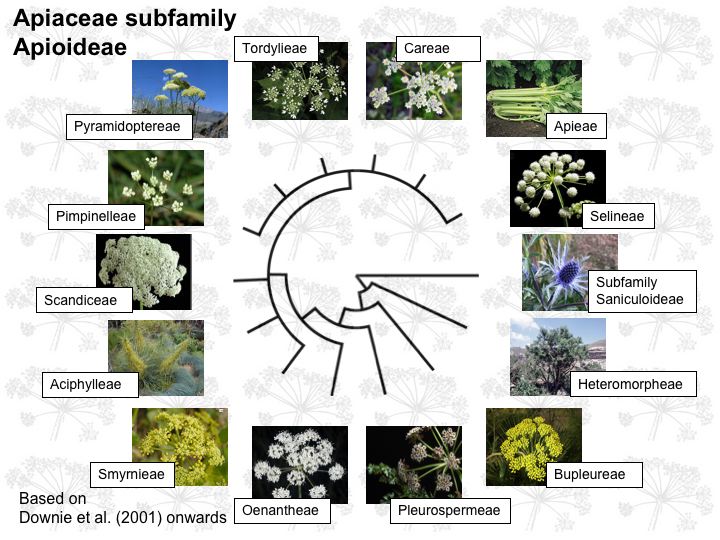
Weiterführende Literatur
- Chenyang Liao, Stephen R. Downie, Qinqin Li, Yan Yu, Xingjin He, Bo Zhou: New Insights into the Phylogeny of Angelica and its Allies (Apiaceae) with Emphasis on East Asian Species, Inferred from nrDNA, cpDNA, and Morphological Evidence. In: Systematic Botany. Band 38, Nr. 1, Februar 2013, S. 266–281, doi:10.1600/036364413X662060.
- Mei Liu, Gregory M. Plunkett, Ben-Erik Van Wyk, Patricia M. Tilney, Porter P. Lowry II: The phylogenetic significance of the carpophore in Apiaceae. In: Annals of Botany. Band 110, Nr. 8, 2012, S. 1531–1543, doi:10.1093/aob/mcs204, Vorlage:PMC.
- Łukasz Banasiak, Marcin Piwczyński, Tomasz Uliński, Stephen R. Downie, Mark F. Watson, Bandana Shakya, Krzysztof Spalik: Dispersal patterns in space and time: a case study of Apiaceae subfamily Apioideae. In: Journal of Biogeography. Band 40, Nr. 7, 2013, S. 1324–1335, doi:10.1111/jbi.12071, (PDF).
- Galina V. Degtjareva, Eugene V. Kljuykov, Tahir H. Samigullin, Carmen M. Valiejo-Roman, Michael G. Pimenov: ITS phylogeny of Middle Asian geophilic Umbelliferae-Apioideae genera with comments on their morphology and utility of psbA-trnH sequences. In: Plant Systematics and Evolution. Band 299, Nr. 5, Mai 2013, S. 985–1010, doi:10.1007/s00606-013-0779-9.
- Magdy M. Mourad, Abdelsalam Al-Nowaihi: Numeric taxonomy of some Apioideae species, based on general morphology and carpological features. In: Adansonia. Band 35, Nr. 2, Dezember 2013, S. 375–389. doi:10.5252/a2013n2a9.
- C. Weitzel, N Rønsted, Krzysztof Spalik, H. T. Simonsen: Resurrecting deadly carrots: towards a revision of Thapsia (Apiaceae) based on phylogenetic analysis of nrITS sequences and chemical profiles. In: Bot. J. Linn Soc., Volume 174, 2014, S. 620–636. doi:10.1111/boj.12144
- Mehrnoush Panahi, Łukasz Banasiak, Marcin Piwczyński, Radosław Puchałka, Alexei A. Oskolski, Krzysztof Spalik: Phylogenetic relationships among Dorema, Ferula and Leutea (Apiaceae: Scandiceae: Ferulinae) inferred from nrDNA ITS and cpDNA noncoding sequences. In: Taxon, Volume 64, Issue 4, 2015, S. 770–783. doi:10.12705/644.8
- M. Piwczyński, R Puchałka, Krzysztof Spalik: The infrageneric taxonomy of Chaerophyllum (Apiaceae) revisited: new evidence from nuclear ribosomal DNA ITS sequences and fruit anatomy. In: Bot. J. Linn Soc., Volume 178, 2015, S. 298–313. doi:10.1111/boj.12282
- Mehrnoush Panahi: Biogeographic reconstruction of the genus Ferula inferred from analyses of nrDNA and cpDNA sequences. In: Iran. J. Bot., Volume 25, Issue 2, Dezember 2019, S. 79–94. doi:10.22092/ijb.2019.126389.1241
- Jun Wen, Yan Yu, Deng-Feng Xie, Chang Peng, Qing Liu, Song-Dong Zhou, Xing-Jin He: A transcriptome-based study on the phylogeny and evolution for taxonomic controversial subfamily Apioideae (Apiaceae). In: Annals of Botany, Volume 125, Issue 6, Februar 2020, S. 937–953. doi:10.1093/aob/mcaa011 PDF online.
- Marcin Piwczyński, Paulina Trzeciak, Madalina Oana Popa, Maciej Pabijan, José María Corral, Krzysztof Spalik, Andrzej Grzywacz: Using RAD-seq for reconstructing phylogenies of highly diverged taxa: a test using the tribe Scandiceae (Apiaceae). In: Journal of Systematics and Evolution, Februar 2020. doi:10.1111/jse.12580
- James J. Clarkson, Alexandre R. Zuntini, Olivier Maurin, Stephen R. Downie, Gregory M. Plunkett, Antoine N. Nicolas, John F. Smith, Mary Ann E. Feist, Karime Gutierrez, Panagiota Malakasi, Paul Bailey, Grace E. Brewer, Niroshini Epitawalage, Sue Zmarzty, Félix Forest, William John Baker: A higher‐level nuclear phylogenomic study of the carrot family (Apiaceae). In: American Journal of Botany, Volume 108, Issue 7, 2021, S. 1252–1269 Vorlage:Doi
- Tahir Samigullin, Maria Logacheva, Elena Terentieva, Galina Degtjareva, Michael Pimenov, Carmen Valiejo-Roman: Plastid Phylogenomic Analysis of Tordylieae Tribe (Apiaceae, Apioideae). In: Plants, Volume 11, Issue 55, März 2022. S. 709. doi:10.3390/plants11050709
- Long Weng, Yunhui Jiang, Yong Wang, Xuemei Zhang, Ping Zhou, Mei Wu, Hongzhe Li, Hang Sun, Shaotian Chen: Chloroplast genome characteristics and phylogeny of the sinodielsia clade (apiaceae: apioideae). In: BMC Plant Biology, Volume 23, Issue 11, Mai 2023. doi:10.1186/s12870-023-04271-2
- Chang-Kun Liu, Jiao-Jiao Deng, Bo-Ni Song, Huan-Huan Qin, Song-Dong Zhou, Xing-Jin He: Plastid phylogenomics provide evidence to accept a new genus Pseudopeucedanum (Apiaceae) separated from Peucedanum s.l. In: Botanical Journal of the Linnean Society, Volume 22, November 2023. doi:10.1093/botlinnean/boad062
- Jing Zhou, Xinyue Wang, Shilin Zhou, Junmei Niu, Jiarui Yue, Zhenwen Liu, Stephen R. Downie: Circumscription of the East Asia clade (Apiaceae subfamily Apioideae) and the taxonomic placements of several problematic genera. In: Plant Diversity, Volume 1, November 2023. doi:10.1016/j.pld.2023.11.002